
Joint Defense Acquisitions: Baltic States’ Military Procurement Strategies

Joint Defense Acquisitions: Baltic States’ Military Procurement Strategies

Lukas Šimonis

Lukas Šimonis

February 7, 2026
17:07
HIMARS of the Estonian Army firing for the first time. July 2025. Photo credits: @MoD_Estonia

Joint Defense Acquisitions: Baltic States’ Military Procurement Strategies

Lukas Šimonis

Lukas Šimonis

February 7, 2026
17:07
HIMARS of the Estonian Army firing for the first time. July 2025. Photo credits: @MoD_Estonia

The Baltic states are often referred to as the “three sisters”. Similar in terms of economic development, culture, and foreign policy. Lithuania, Latvia and Estonia are all members of the European Union and NATO. All three countries have a long history of suffering from Russian aggression. After the 2014 Russian aggression and the 2022 Russian invasion of Ukraine, the Baltic states have begun a fast military buildup, as their position makes them a possible next target after Ukraine. However, if one investigated their defensive procurement programs, one thing would stand out. All three countries have seemingly different approaches to it, and there are only a few joint procurements programs. Given the similarities mentioned between the Baltic states, it seems strange and unusual. This requires a deeper investigation into Baltic military planning.

NATO encourages joint procurement between countries, as similar weapon systems simplify logistics, integration, and training. Not to mention the fact that it lowers the economic burden by shrinking individual unit prices and cost of research and development. It also strengthens diplomatic and industrial cooperation. Yet at the same time, joint procurement requires participating nations to have at least somewhat similar military planning. This is a reason why there are a few joint procurement programs in the Baltics. Despite seemingly similar positions, all three Baltic states have a different idea on what kind of hardware they need.

Estonia is planning to spend more than 10 billion euros on military hardware between 2026 and 2029. That money will be spent on ammunition stockpiles, air defense improvement, UAVs, anti-ship missiles (AShMs) and other equipment. Estonia largely models its military after the neighboring Finland, focusing on lighter, mobile military force and equipment suitable for conscripts. Integration with Finland is important, as the result Estonian military uses a lot of weapon systems Finland uses, such as Swedish CV9035 infantry fighting vehicles, Korean K9 Thunder self-propelled howitzers or Finnish Patria Pasi armored personnel carriers. Estonia is also known for prioritizing speed of delivery and price while choosing new military hardware. Good example of that would be Estonia dropping out of the Common armored vehicle system programme and picking Turkish Otokar Arma 6×6 APCs and Nurol Makina NMS 4×4 military vehicles, being the first and the only country in the region to pick Turkish made armored vehicles. Thus, Estonia tries to balance speed of delivery, quantity, price and integration with Finnish military, as well as cooperation with South Korean defense industry (K9 thunder and K239 Chunmoo artillery systems).

Latvian military procurement is enigmatic. Unlike Estonia, Latvia does not have strong ties with Finnish armed forces. It also somewhat suffers due to lack of funding, as Latvian armed forces receive the smallest funding of all three Baltic states, coming at 2.16 billion euros in 2026. These circumstances mean that Latvia often chooses various suppliers, without a clear favorite or distinction. As illustrated by the current military hardware of Latvian armed forces, such as the American made M1095 self-propelled howitzers, British CVR(T) armored vehicles, Patria 6×6 APCs, or future equipment like Spanish ASCOD 2 tracked infantry fighting vehicles or Swedish ARCHER self-propelled howitzers. Therefore, Latvian defense procurement could be best described as somewhat erratic, although still focused on building Estonian like rapid and mobile force, best suited for Latvian territory. Like Estonians, Latvians seemingly prioritize costs and domestic production capability when choosing new suppliers, not political alliances.

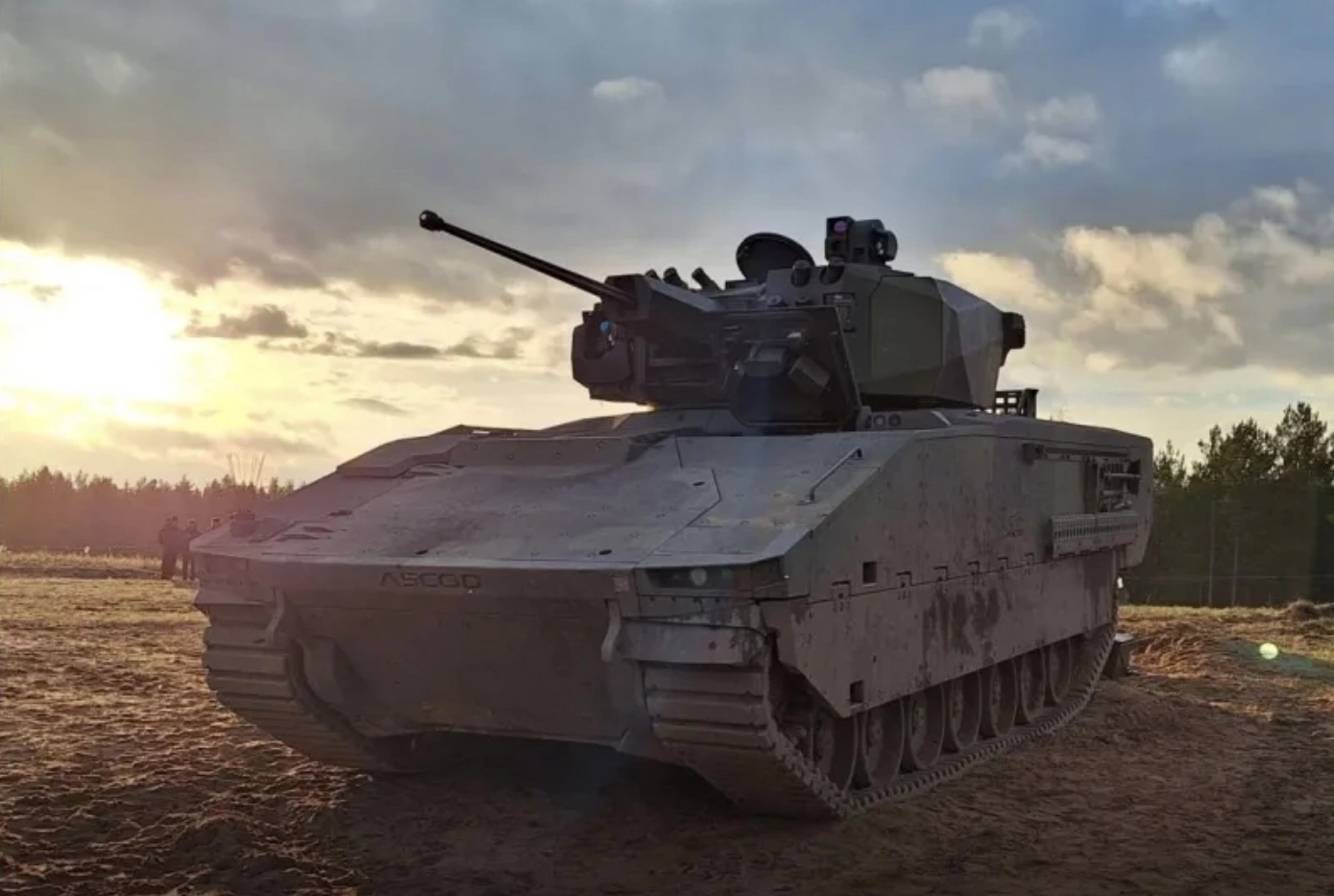
ASCOD infantry fighting vehicle equipped with a UT30 MK2 turret. Photo credits: Elbit Systems

Lithuanian armed forces plan their purchases differently from Latvia and Estonia. There are several reasons for that. For one, out of three Baltic states, Lithuania has the largest defense budget, at 4.79 billion euros in 2026, and another is political alliances and integration with certain NATO countries. Lithuania currently hosts a large force of German troops as part of NATO Enhanced Forward Presence battalion, as well as two US Army battalions (over 1000 troops). The number of German troops in Lithuania will grow substantially in the next few years, as Germany is preparing for the largest permanent deployment since WW2, activating a new brigade in Lithuania. The Panzer brigade 45, also known as the “Lithuanian” brigade will consist of nearly 5000 troops (with their families), and Leopard 2a8 main battle tanks, Panzerhaubitze 2000 self-propelled howitzers and other military vehicles. With defense of Lithuania in mind, the Panzer brigade 45 is a massive diplomatic achievement for Lithuania, cementing Lithuanian German alliance and cooperation within NATO. Thus, Lithuania seeks to build its military after the German model and seeks deep integration with Bundeswehr and US military. Naturally, this leads to different priorities from Estonia or Latvia. Firstly, larger military budget and interoperability with Germany results in heavier, mechanized force. Lithuania currently operates German Boxer/Vilkas infantry fighting vehicles, Panzerhaubitze 2000 self-propelled howitzers, M113 APCs acquired from Germany, large fleet of Mercedes made trucks and light vehicles. And it is set to operate Leopard 2a8 main battle tanks and Leopard based Leguan bridge layers in the future, becoming the first Baltic state to operate a tank fleet. German/Lithuanian cooperation also led to industrial projects, like Rheinmetall planning to open two ammunition factories in Lithuania, as well as planned assembly of Leopard 2a8 tanks. Therefore, Germany is of utmost importance to Lithuania, and the military procurement reflects that. But there is also the United States. Lithuania can be called an ambassador of American defense industry in the region, as no other Baltic state purchases so much military equipment from United States. Javelin anti-tank guided missiles, Humvee armored vehicles, Switchblade loitering munitions, Norwegian/American NASAMS 3 surface to air missile systems, M142 HIMARS rocket artillery systems, UH-60m utility helicopters and second largest J-LTV light vehicle fleet after the United States. Despite the recent Euro Atlantic tensions, United States remain a key ally to Lithuania. With before mentioned US army battalions stationed in Lithuania, interoperability with US forces is extremely important, while hardware purchases from US builds political leverage in Washington.

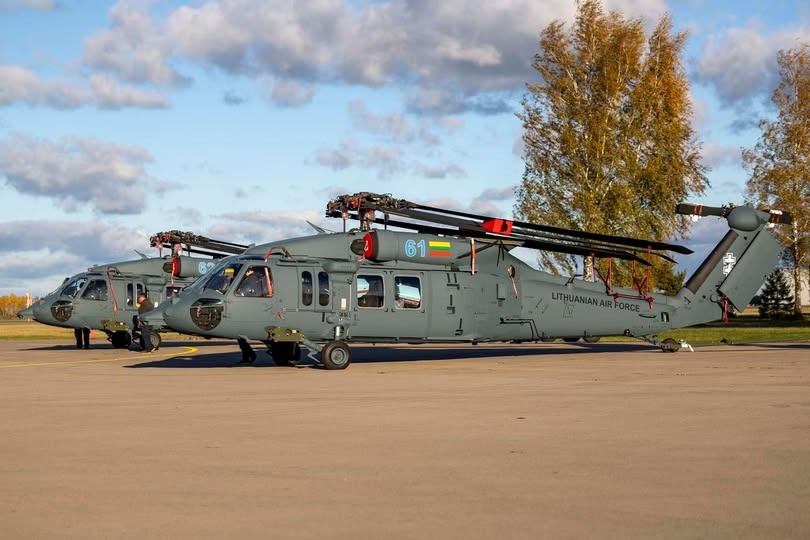
The first Lithuanian Black Hawks. Photo credits: Lithuanian Armed Forces

Consequently, Lithuania tries to balance military procurement between Germany and United States. Where Germany or US cannot provide a solid choice, Lithuania choses other countries, but is still Eurocentric (with an exception for Israel), avoiding Korean or other alternatives, unlike Estonia or other northern allies. Recent examples being selecting French made Caesar MKII self-propelled wheeled howitzers or Swedish RBS-70 MSHORAD mobile air defense systems. In summary, due to larger defense budget, interoperability and political alliances Lithuania seeks more conventional, heavier mechanized force like that of Germany, and it differs from Latvian or Estonian doctrine, focused on lighter, cheaper and more mobile force.

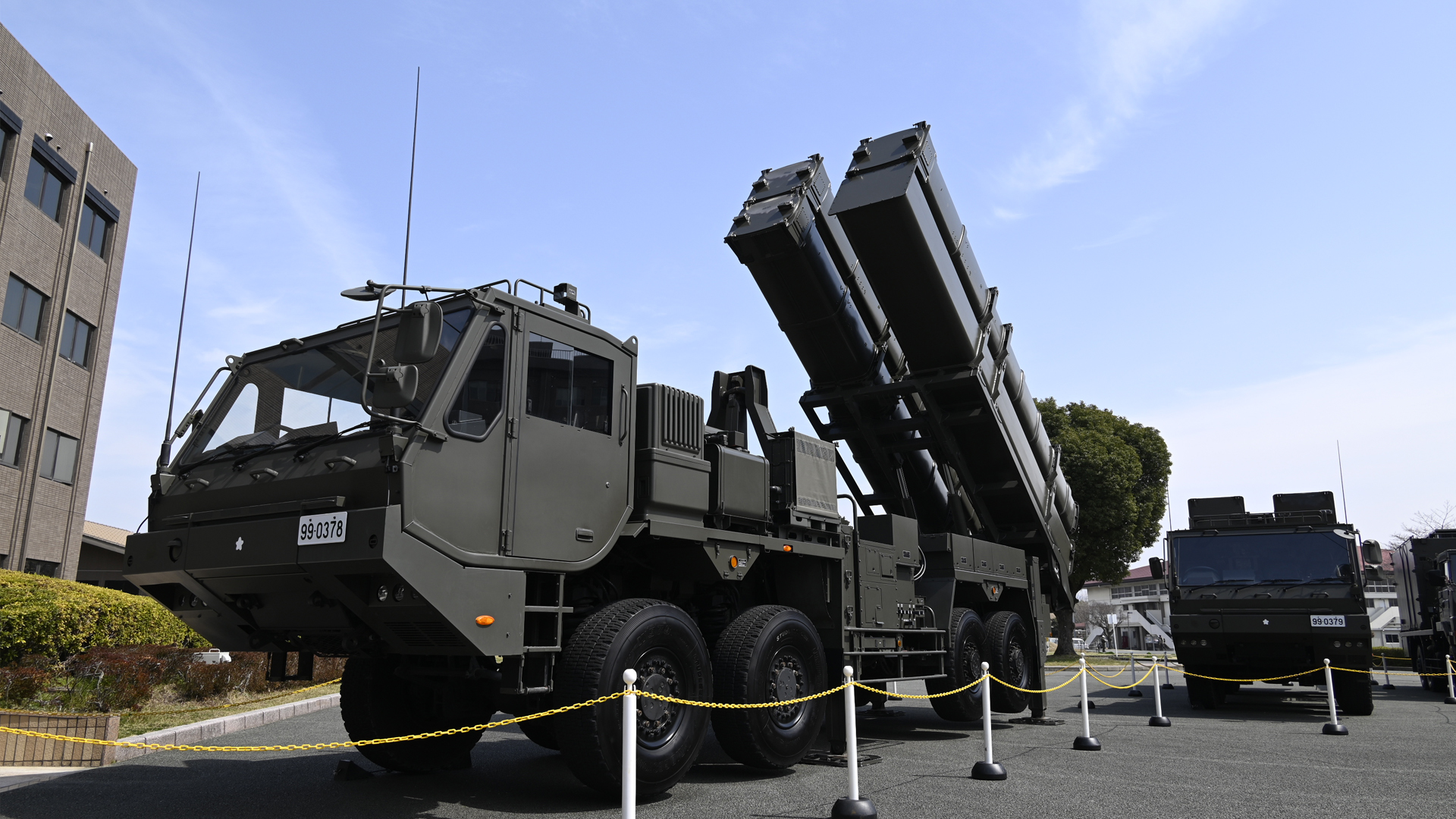
Even though the doctrines and needs between the Baltic states differ, some aspects of it remain the same, and results in rare, but much needed joint procurement projects. The greatest example would be the procurement of M142 HIMARS. All three Baltic states agreed on choosing it to bolster their defenses, building supply chains and interoperability, as well as improving logistics. Unfortunately, there are not many examples of such cooperation, as other agreements like joint Latvian and Estonian purchase of German IRIS-T air defense system or Lithuania and Estonia participating in broader Nordic initiative to buy Swedish made CV90 infantry fighting vehicles. Hence, joint procurement between all three nations remains severely limited, which consequently leads to higher individual unit costs, increased strain on logistic chains, and limited interoperability.

CV90 IFV of the Estonian Armed Forces. Photos from open sources

In conclusion, even though the Baltic states are similar superficially, with all three facing the threat of Russian invasion, they have different approaches on hardware procurement and military buildup. Estonia prefers suppliers that can provide affordable equipment fast, with a clear preference for hardware used by the Finnish army, as they are a key Estonian ally. This results in a highly mobile, conscript-friendly, light force. Latvia, facing issues with budget and a lack of clear ally (unlike Estonia or Lithuania) have a similar doctrine to Estonia, attempting to build light and highly maneuverable military, without a clear preference for any one country. Lithuania on the other hand, is different. With larger military budget, strong foreign alliances, Lithuania attempts to build a military that would resemble German armored brigades, emphasizing on heavy mechanized force capable on taking on enemy forces in a conventional battle, supported by the German Panzer brigade 45. Lithuania clearly prefers German and American (or at least European) hardware, for interoperability and political reasons. While there are examples of successful cooperation between the Baltic states (like HIMARS procurement), due to aforementioned differences in doctrine and foreign policy, joint procurement remains limited, hindering joint defense capability. The Baltic states must find a solution to this problem, or suffer from reduced capabilities, strained logistics, and limited interoperability.

SUPPORT MILITARNYI

PrivatBank ( Bank card )
5169 3351 0164 7408
Bank Account in UAH (IBAN)
UA043052990000026007015028783
ETH
0x6db6D0E7acCa3a5b5b09c461Ae480DF9A928d0a2
BTC
bc1qv58uev602j2twgxdtyv4z0mvly44ezq788kwsd
USDT
TMKUjnNbCN4Bv6Vvtyh7e3mnyz5QB9nu6V
Popular
Button Text