

“Americans Think These Are Cool Drones, But This Is China’s Industry”: How Dependence on Components Affects the Development of Ukrainian Defense Tech

“Americans Think These Are Cool Drones, But This Is China’s Industry”: How Dependence on Components Affects the Development of Ukrainian Defense Tech

Катерина Супрун

Катерина Супрун

December 11, 2025
16:09
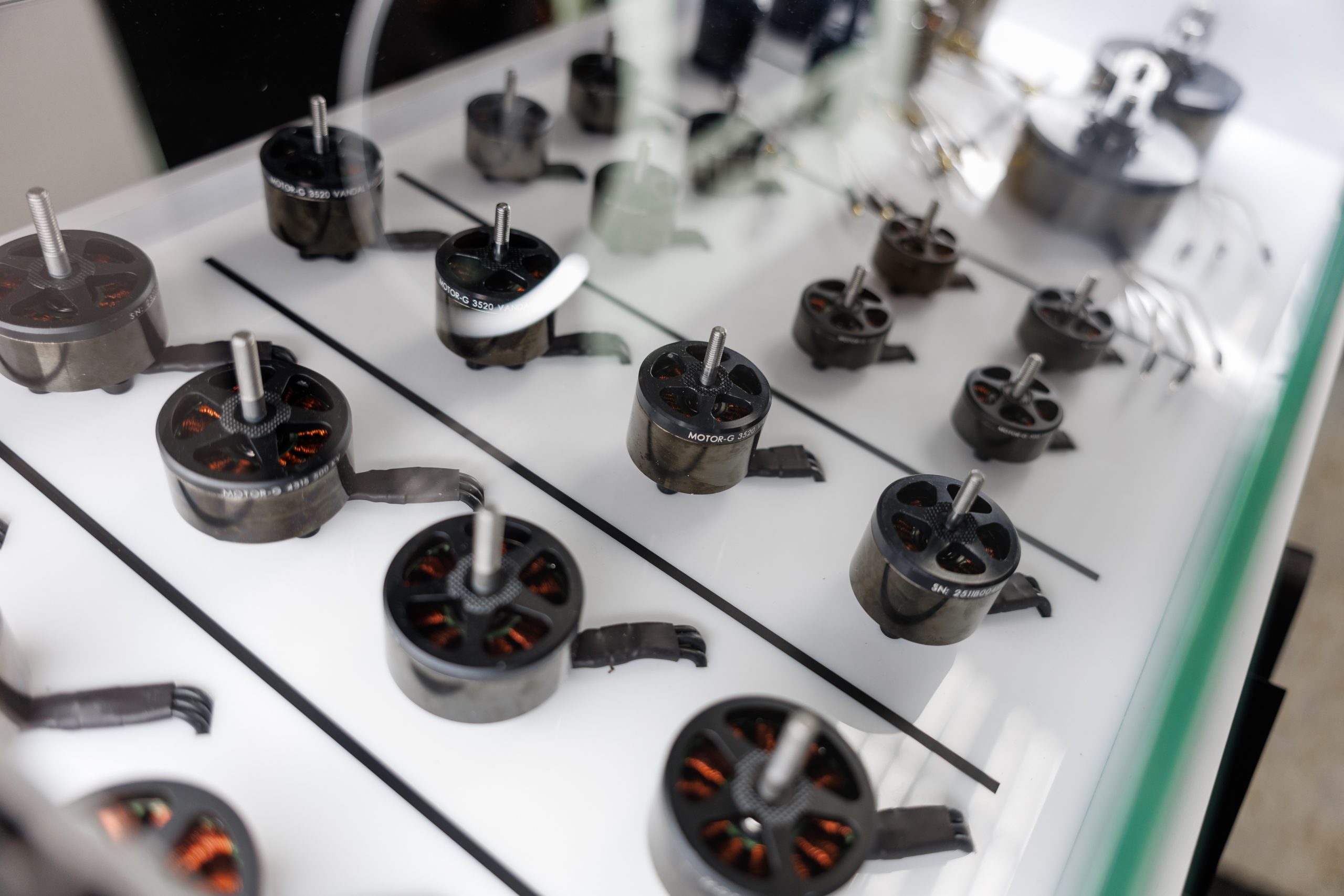
Electric motors for drones by the Ukrainian company Motor-G. Photo credits: IRON Cluster, December 2025
News

“Americans Think These Are Cool Drones, But This Is China’s Industry”: How Dependence on Components Affects the Development of Ukrainian Defense Tech

Катерина Супрун

Катерина Супрун

December 11, 2025
16:09
Electric motors for drones by the Ukrainian company Motor-G. Photo credits: IRON Cluster, December 2025

Over the past two years, Ukraine has built one of the world’s fastest-growing drone industries. But the mass production of UAVs depends on the country’s control over their components. The Components of Freedom study, conducted by the IRON cluster in cooperation with the Snake Island Institute, systematically assessed the localization levels of key components for UAVs and EW, and identified the factors hindering the growth of Ukrainian manufacturers.

The issue of localization arose at the beginning of the drone boom, but when Ukraine started manufacturing drones, there were almost no component manufacturers. During the nearly 4 years of the full-scale war, the industry grew, and companies emerged that could design and manufacture their own motors, propellers, frames, boards, cameras, and communication components.

Yuriy Lomikovsky, co-founder of IRON. Photo credits: IRON Cluster, December 2025

“There are a lot of component manufacturers among the IRON cluster members, but they always remain out of focus,” IRON co-founder Yuriy Lomikovsky says. “We talk about exports, we talk about long-term contracts, we always talk about manufacturers of final products, but these products consist of components. And, unfortunately, a substantial share of them consists of Chinese components. In general, there is an understanding of this, but there are no figures on the Ukrainian market’s capacity. There is also no understanding of how to stimulate it.”

So they decided to study the component market and the offer of Ukrainian manufacturers. It is important that drone component production is not only about the domestic market but also about how Ukrainian products are perceived abroad.

“Americans and Europeans understand that most of the global drone industry depends on China,” Kateryna Buchatska, Director of Analytics at Snake Island Institute, explains. “If Ukraine wants to cooperate with the US or export, we need to show that we are able to get out of Chinese components at least at the first level.

Kateryna Buchatska, Director of Analytics at Snake Island Institute. Photo credits: IRON Cluster, December 2025

Level of localization

The so-called “first level” of localization is actually modules that are assembled in Ukraine. Manufacturers interviewed by Iron and Snake Island Institute and open market data show that the largest percentage of localization is in frames and housing elements – 85% are made in Ukraine, the middle level is communication and control – 50-70%, the low level is flight stacks, electric motors, thermal imaging cameras – up to 25%. However, digital video transmitters and receivers, daytime cameras, and numerous other electronic modules are almost entirely absent from the market.

Screenshot from the Snake Island Institute's “Components of Freedom” study

As for components for electronic warfare equipment, the Ukrainian share is only 5% and is limited to antennas, cable assemblies, and mechanics. Cases, plastics, wires, and metal elements also come from the domestic market, but this does not reduce the critical dependence on imports.

The other 95% are electronic systems, which are mostly imported from China. SDR modules for radio signal processing are also supplied from the United States, amplifiers from South Korea, computers from the United States and China, rotary mechanisms, and some peripheral equipment also come from China.

What can the Ukrainian components market create?

Component manufacturers are ready to increase production capacity and increase volumes, but this requires stable demand. Manufacturers of end products often choose Chinese components, and there are several reasons for this:

  • Price. Ukrainian components are often more expensive, but high demand can help address the issue. At the same time, it is hardly possible to match the Chinese scale. At the same time, Ukrainian companies often offset the price difference through customization, rapid adaptation, and their own software. At the same time, the study emphasizes that despite the added value, the price remains a determining factor.
  • Limited production capacity. Large volumes of drone production under contract require companies to fulfill requests quickly, which in turn requires large production capacities. Accordingly, this point complements the previous one.
  • Lead times and a lack of stock in the warehouse. Product manufacturers often need to quickly close contracts, and Ukrainian component manufacturers do not have finished products in stock because they lack working capital. Another factor is that government contracts do not allow prepayments, so drone manufacturers cannot make advance payments to component manufacturers.

All three factors are interconnected and influence each other, but there is one more equally important factor: regulatory policy.

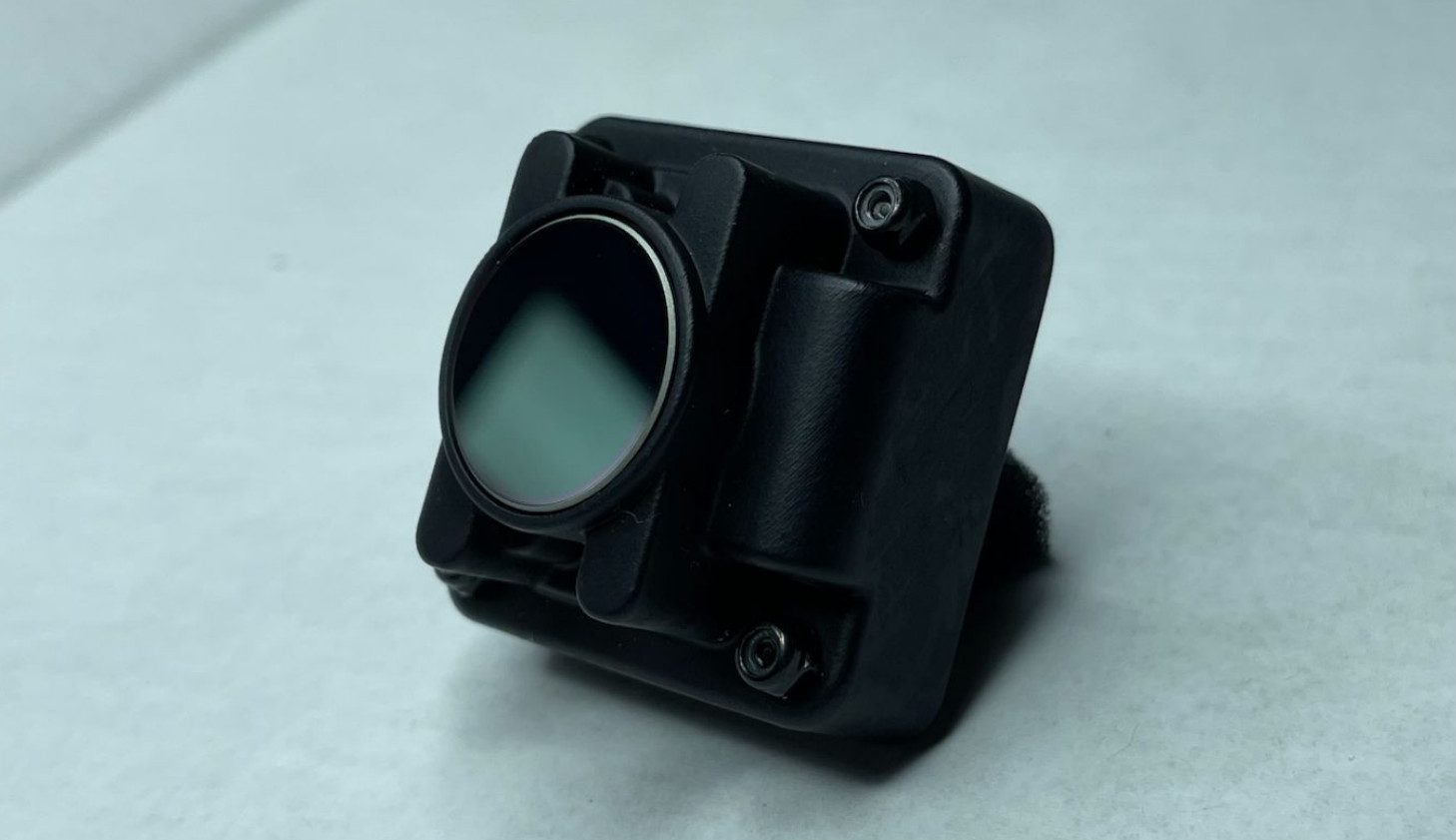
Kurbas-256 Ukrainian-made thermal imaging camera. Photo credits: Odd Systems

Due to the benefits of importing components, manufacturers of final products do not pay VAT or customs duties on imported components. Ukrainian component manufacturers, on the other hand, pay VAT and customs duties on the raw materials they use to make their products. As a result, a Ukrainian component is often 10-20% more expensive.

“This is simply the cost of customs duties and VAT,“ Lomikovsky explains. ”If the conditions are equalized, manufacturers will immediately go to Ukrainian companies – all the market participants we interviewed confirm this.

The study notes that if tax incentives, special loan and grant programs, and public procurement preferences are put in place, component manufacturers will be able to address the existing problems.

As a reminder, the Brave1 defense cluster has launched a grant program for component manufacturers. The program provides funding of up to UAH 8 million for developers of components for unmanned systems, electronic warfare, and other innovative weapons. The goal is to accelerate the development of technologies and increase their readiness.

In cooperation with the Ministry of Defense, manufacturers, and combat units, we have identified 20 priority areas for support.

Localization of component production affects the perception of Ukrainian weapons abroad

The US and Europe are well aware of the scale of Ukrainian drone production – but there is a serious distrust of its origin.

“They think these are cool drones, but it’s all Chinese,” Kateryna Buchatska, Director of Analytics at Snake Island Institute, says. “We’ve even heard this from US government agencies. And to be taken seriously, we need to show our component base.”

At the same time, European and American manufacturers are steadily increasing their presence in the Ukrainian defense tech market, but the presence of Chinese components can undermine cooperation.

“American manufacturers operating in Ukraine have workshops here, have constant contact with the military – they are looking for Ukrainian components to finalize their products, and when they find them, they see that they are not Ukrainian, but Chinese. This dramatically affects further cooperation,” Buchatska says.

She emphasizes that if Ukrainian components can enter the markets of partner countries, there will be demand. Local companies, including American ones, that can produce components are not deploying their capabilities because they lack orders.

Communication system components by Sine Engineering. Photo credits: IRON Cluster, December 2025

At the same time, foreign manufacturers see Ukraine as a hub for localization. In this case, localization of components for different types of weapons can be an argument for simplifying procurement procedures. Experts emphasize that the primary goal of localizing component production is to provide the army with stable supplies and manufacturers with the R&D support they need.

“We believe that it is impossible to introduce any restrictive policies for manufacturers of final products. That is, we cannot set a minimum percentage of locally produced goods for government contracts. This would kill the industry and leave the defense forces without enough products. All we have to do as a state, except for leveling the playing field, is to create incentives for manufacturers of final products to localize,” Yuriy Lomikovsky, co-founder of the IRON Cluster, says.

“In addition, it often happens that the military uses convenient ”first-level“ systems to equip the final products – we are talking about communications or similar components – and thus ”introduce” drone manufacturers to component manufacturers. In this way, the army gets the right-quality equipment, and manufacturers gain partners.

Such interaction between manufacturers and the military and its impact on product quality is part of Ukraine’s overall experience in modern warfare. At the same time, deepening the localization of military products will be another argument in the formation of a “defense tech valley” that combines research, military experience, and the rapid implementation of battlefield challenges into finished products.

SUPPORT MILITARNYI

PrivatBank ( Bank card )
5169 3351 0164 7408
Bank Account in UAH (IBAN)
UA043052990000026007015028783
ETH
0x6db6D0E7acCa3a5b5b09c461Ae480DF9A928d0a2
BTC
bc1qv58uev602j2twgxdtyv4z0mvly44ezq788kwsd
USDT
TMKUjnNbCN4Bv6Vvtyh7e3mnyz5QB9nu6V
Articles
Popular
Button Text