



Aircraft Carriers of European States: Capabilities in War with China

Aircraft Carriers of European States: Capabilities in War with China

Roman Pryhodko

Roman Pryhodko

February 6, 2026
18:18
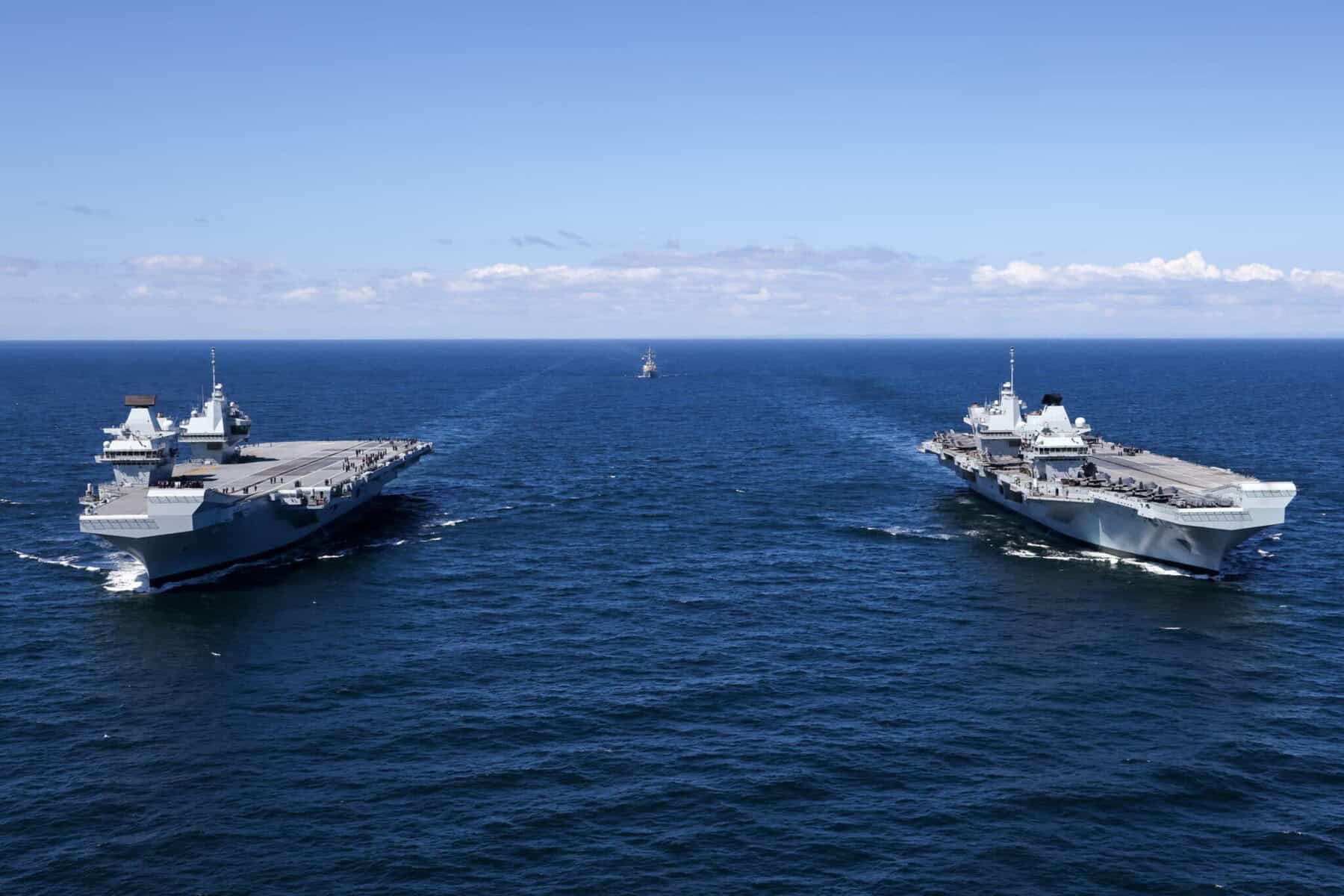
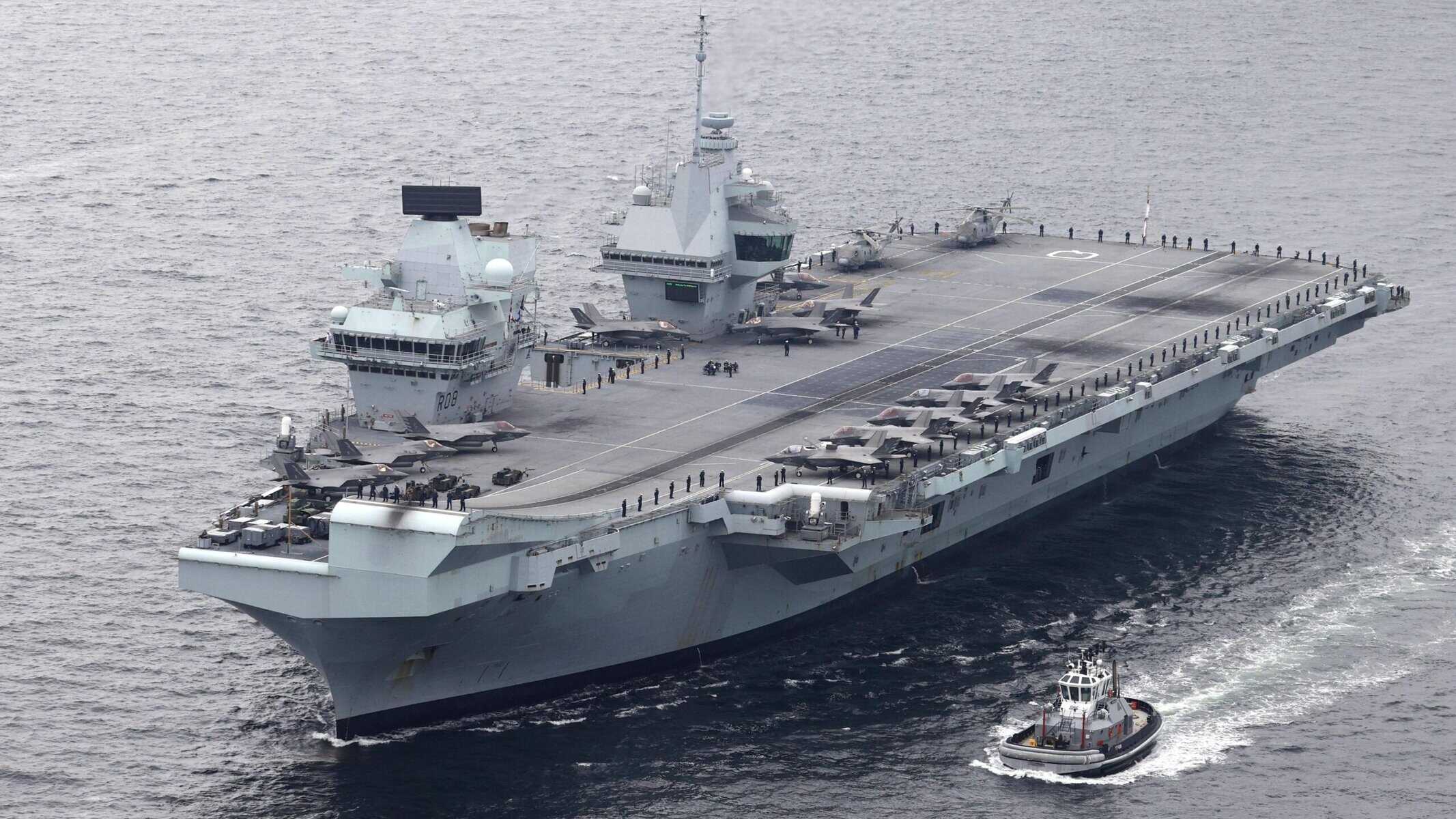
Aircraft carriers HMS Queen Elizabeth and HMS Prince of Wales during deployment. Photo credits: Royal Navy.
News

Aircraft Carriers of European States: Capabilities in War with China

Roman Pryhodko

Roman Pryhodko

February 6, 2026
18:18
Aircraft carriers HMS Queen Elizabeth and HMS Prince of Wales during deployment. Photo credits: Royal Navy.

Modern Europe is radically rethinking the role of its fleet, transforming aircraft carriers from instruments of regional deterrence into key levers of global influence.

Against the backdrop of growing tensions in the Indo-Pacific region, the UK, France, and Italy are increasingly deploying their flagships far beyond the Atlantic, demonstrating their readiness to defend the democratic world order side by side with their allies.

This is not just a show of force, but the formation of a complex maritime security architecture capable of countering Chinese expansion and other global threats.

United Kingdom

The United Kingdom operates two modern Queen Elizabeth-class aircraft carriers (HMS Queen Elizabeth and HMS Prince of Wales). These are the largest ships in the Royal Navy, with a length of 284 m, a displacement of 65,000 tons at full load, a speed of over 25 knots, and a range of 10,000 nautical miles.

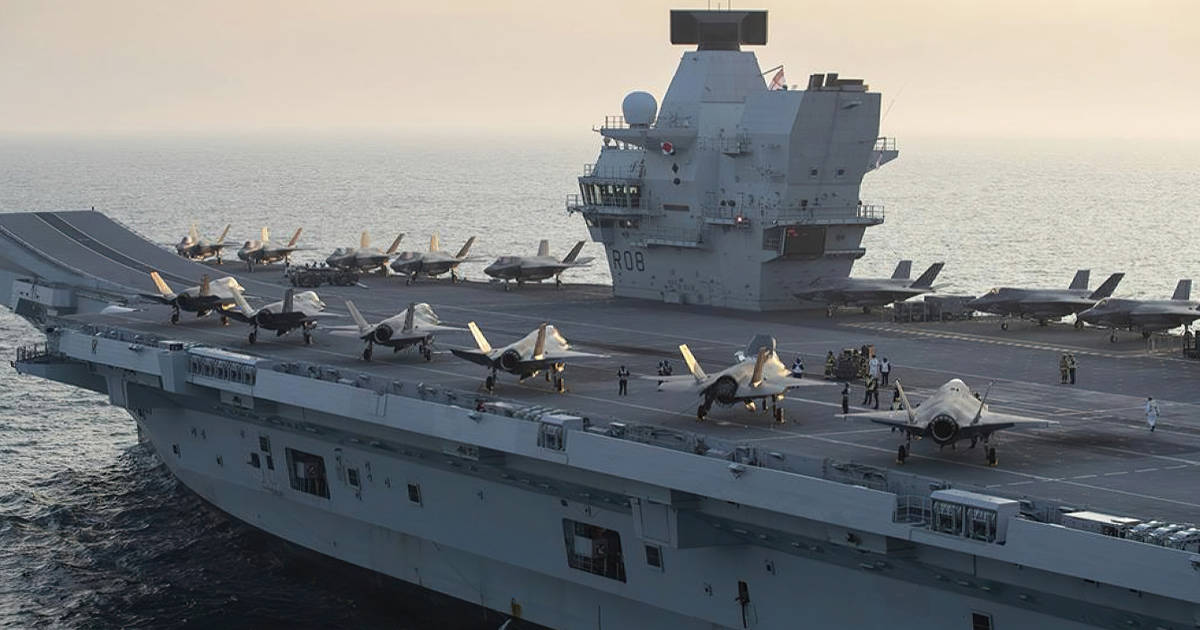
The flight deck (280×70 m) is designed for STOVL aircraft: each aircraft carrier can carry up to 72 aircraft at a time, including up to 36 F-35B Lightning II fighters and various types of helicopters from the British Air Force and Naval Aviation.

The ships have powerful lifts capable of delivering four F-35s from the hangar to the deck in just one minute, and the aircraft are launched from a ski jump at the bow. The ship’s crew formally numbers about 680 people, but together with the flight group, marines, and additional personnel, the number of people on board often exceeds 1,500.

The Queen Elizabeth aircraft carrier. Photo credits: Royal Navy.

It is worth highlighting Britain’s unique advantage: the presence of two modern aircraft carriers makes its fleet the most powerful in Europe in this respect. This potential allows the Royal Navy to operate much more actively than the French or Italian navies, which rely on fewer ships of this class.

Thanks to the pair of ‘queens,’ London is able to maintain a continuous presence in the world’s oceans: while one ship undergoes scheduled maintenance, the other is ready to perform combat missions.

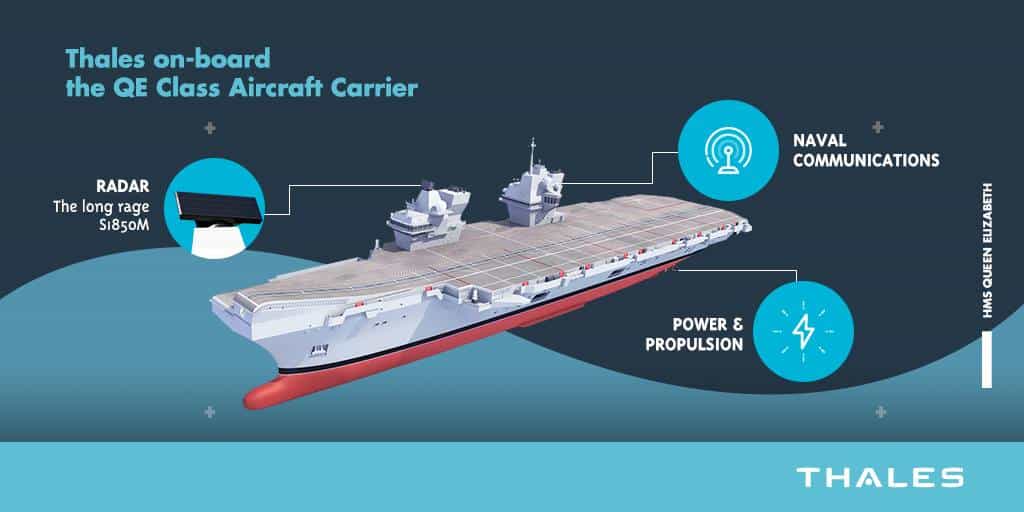
The ship’s radar equipment

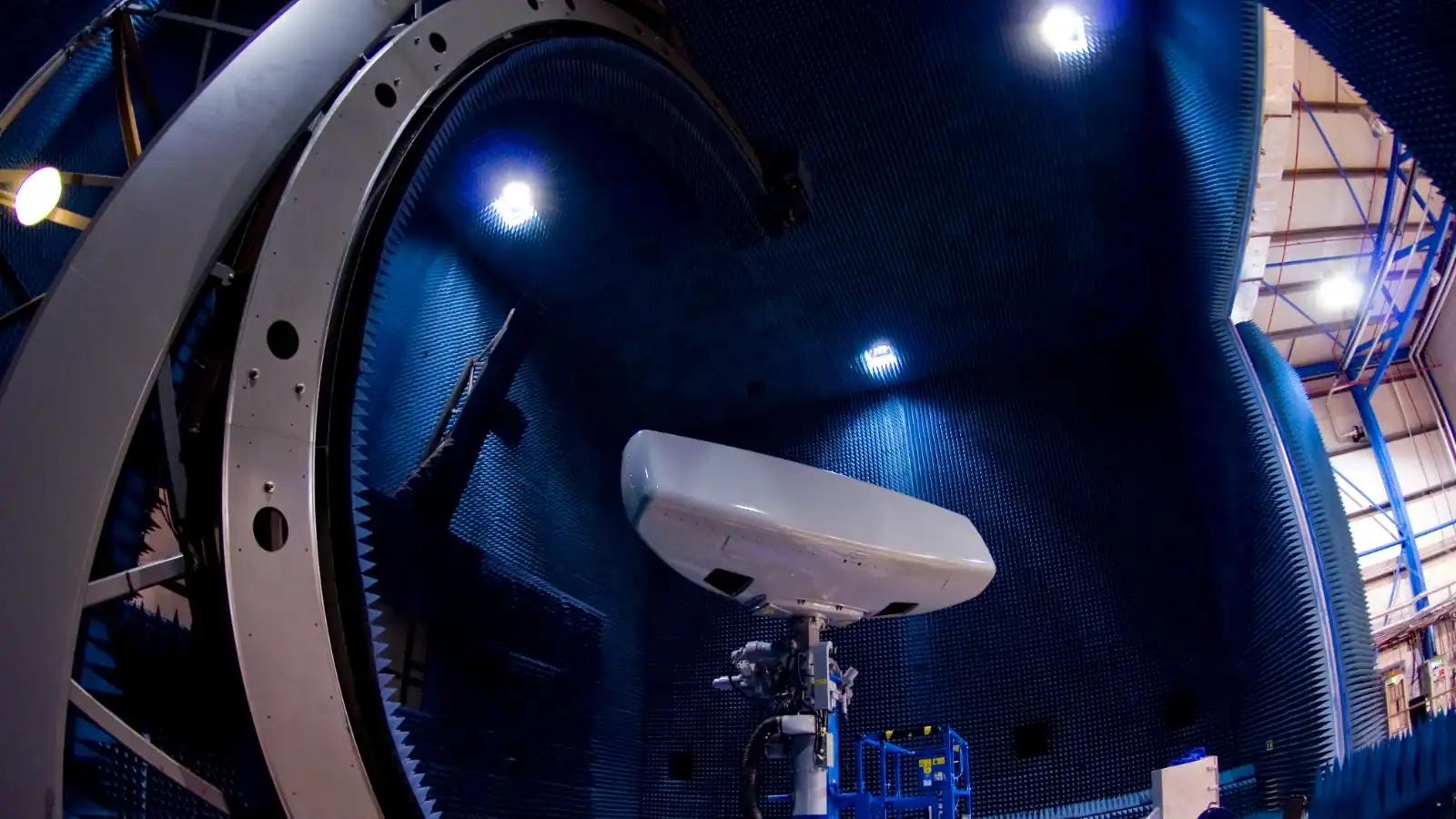
The aircraft carrier’s detection and control system is headed by the S1850M long-range radar. This digital antenna is used for air and surface monitoring, as well as tracking targets at a distance of up to 400 kilometers. The radar is capable of simultaneously tracking about a thousand objects, providing the command with a complete picture of the air situation and timely warnings of threats far beyond the horizon.

The S1850M long-range radar station on the Queen Elizabeth aircraft carrier. Photo credits: Thales.

For accurate tracking of targets at medium ranges, the ship uses the Type 997 ARTISAN three-dimensional radar. This is the main system, which operates within a radius of 200 kilometers and is highly resistant to electronic warfare due to the use of an active phased array antenna. The system effectively detects even small objects in conditions of strong interference, providing accurate target designation for the aircraft carrier’s self-defense systems or escort destroyers.

The Type 997 ARTISAN radar station. Photo credits: BAE Systems

The radar complex is complemented by a network of navigation and electro-optical sensors. In particular, Ultra Electronics Series 2500 modules and specialized glide cameras provide visual and infrared surveillance of the surrounding space and the flight deck. These systems allow targets to be identified in real time and ensure the safe landing of the air group in all weather conditions.

The ship’s air defense

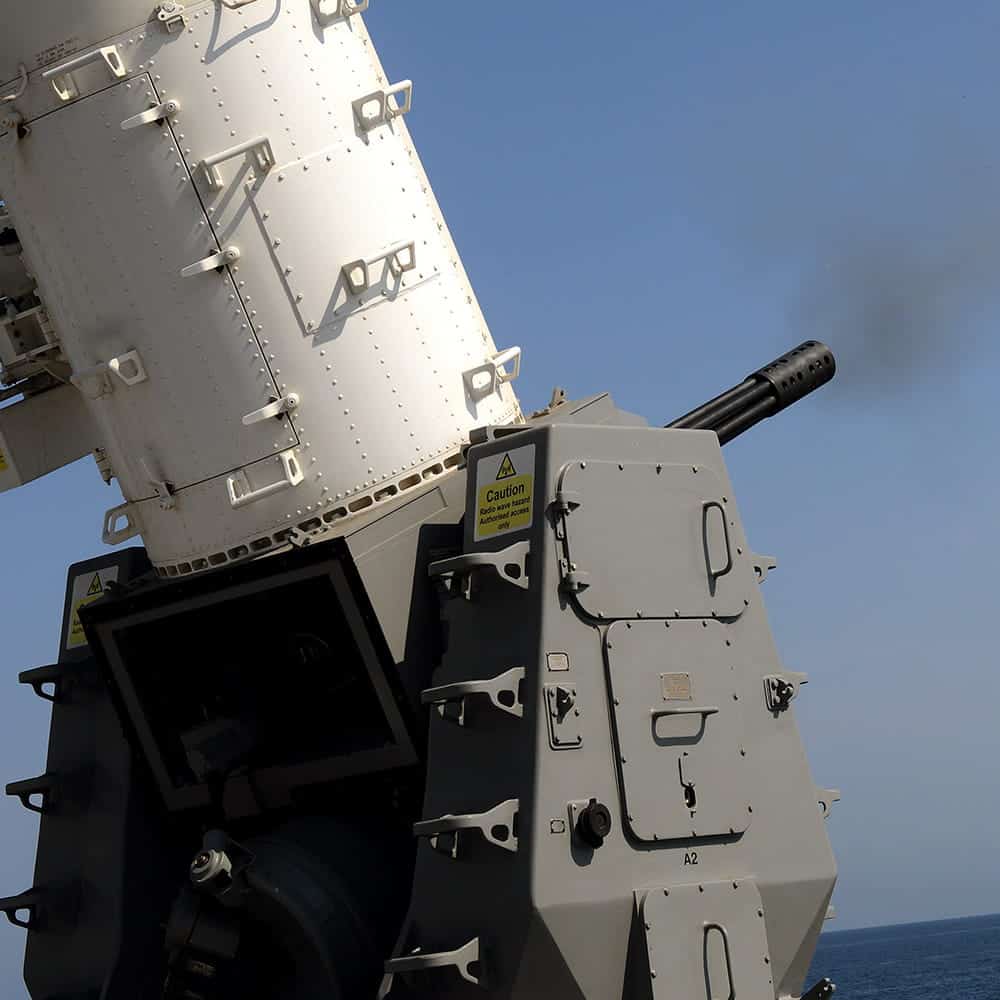
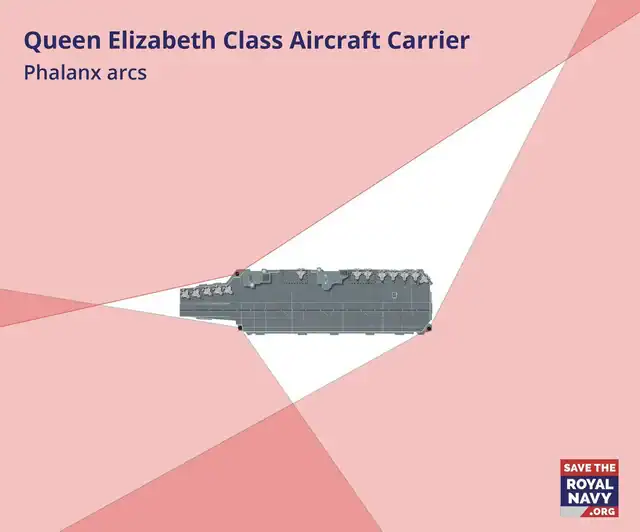
For their own defense, British aircraft carriers carry only close-range artillery, relying on escort ships for long-range cover. In particular, each ship is equipped with three Phalanx CIWS automatic systems (20 mm guns with radio and optical guidance), which serve as the last line of defense against air and surface threats.

The Phalanx Block 1B air defense artillery complex. Photo credits: Royal Navy.

These systems fire up to 4,500 rounds per minute and are capable of shooting down missiles or aircraft at a distance of up to 3–4 km. In addition, four 30 mm DS30M Mark 2 automatic cannons are located at the bow and stern of the deck to destroy targets at short range, primarily low-speed surface objects.

The Phalanx Block 1B. Photo credits: NavyLookout.

At the same time, aircraft carriers do not have their own anti-aircraft missile systems — this role is performed by Type 45 escort destroyers equipped with the Sea Viper (PAAMS) complex with Aster missiles. Thus, the air defense of the British aircraft carrier is based on a combination of ship and aircraft resources.

The ship’s air group

The strike force of the air group is based on F-35B Lightning II multi-role fighters. This modification uses short take-off and vertical landing technology, which determines the entire tactics of flight operations on British ships.

The F-35B performs a wide range of tasks: from gaining air superiority and striking ground and sea targets to electronic reconnaissance. Thanks to its powerful sensors, the aircraft acts as an advanced information hub, collecting data for the entire fleet and allowing British forces to conduct operations far beyond their land bases.

Merlin helicopters play a critical role in protecting the formation. A specialized version of the Merlin Crowsnest, equipped with powerful radar, serves as the fleet’s ‘eyes’ beyond the radio horizon, detecting low-altitude missiles and aircraft well in advance of ship radars.

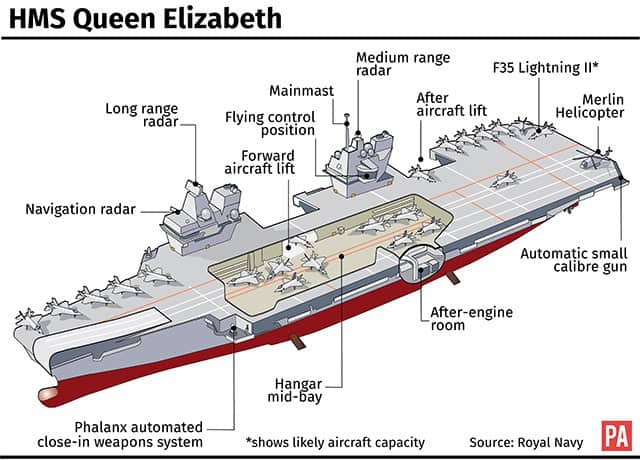
Schematic view of the Queen Elizabeth-class aircraft carrier. Photo credits: BAE Systems.

Other Merlin modifications, in coordination with escort frigates, hunt submarines using hydroacoustic buoys and torpedoes. This defensive perimeter is complemented by Wildcat attack helicopters, which counter enemy boats and cover logistics operations.

The composition of the air wing is not fixed and varies flexibly depending on the combat mission. If the priority is to demonstrate force or launch a massive attack, the command increases the number of F-35B fighters, and for defensive missions or hunting submarines, it fills the deck with helicopters.

The British aircraft carrier HMS Queen Elizabeth (R08) with F-35B fighters. Photo credits: Royal Navy

For example, during the deployment of the Carrier Strike Group, a typical configuration may include about 18-26 F-35B fighters and 16 Merlin helicopters of various types. All of these platforms are integrated into a single digital network, allowing for instantaneous exchange of target data between pilots, the carrier, and escort destroyers.

France

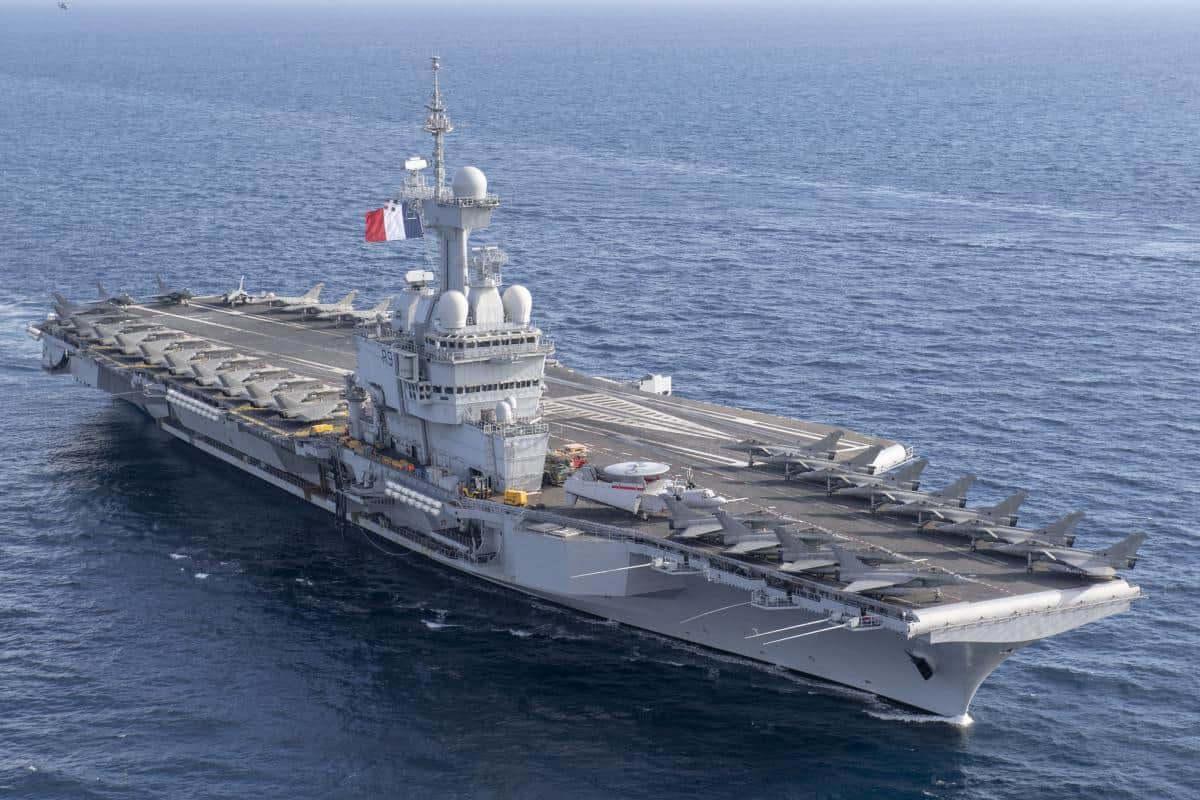
The French Navy relies on a single nuclear-powered aircraft carrier, the Charles de Gaulle. This ship, which took two decades to build and was commissioned in 2001, remains the only non-American carrier with a nuclear power plant and catapult launch system.

Although it is smaller than its British counterpart (42,000 tons displacement versus 65,000), its nuclear reactor gives it a significant advantage in terms of autonomy. This allows it to carry out long missions over vast distances without the need to refuel.

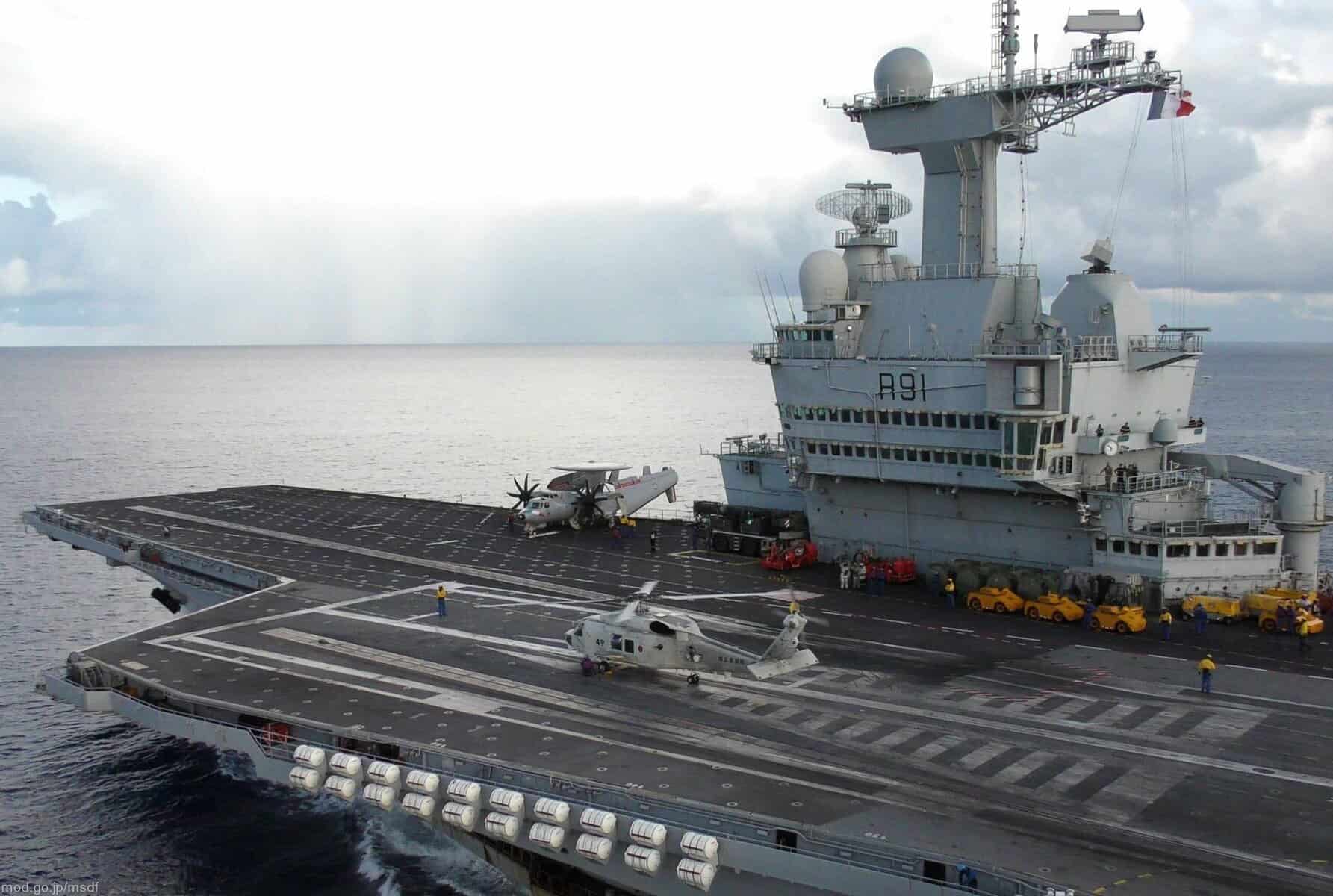
The Charles de Gaulle aircraft carrier during deployment at sea. Photo credits: US Navy.

A key combat feature of the ship is the use of two 75-meter C-13 steam catapults.

This system allows heavy Dassault Rafale M fighters with maximum combat load to be launched into the air, while an arresting gear system is used for landing. This distinguishes the French approach from the British one, which relies on ski jumps and vertical take-off aircraft.

The ship’s radar equipment

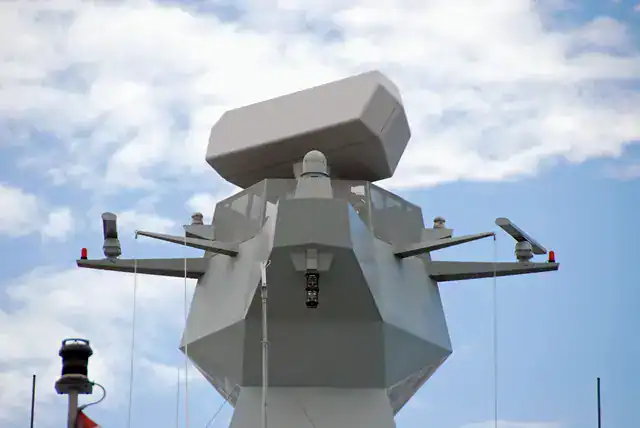
The Charles de Gaulle’s radar architecture is based on the principle of multi-level protection, where each system is responsible for a separate echelon and type of potential threats. The central place in this sensor complex is occupied by the SMART-S Mk2 three-dimensional radar, which the ship received during a major modernization at the end of 2017.

This station replaced outdated systems and took the aircraft carrier’s capabilities to a new level: it provides multi-altitude surveillance and is capable of detecting small objects at medium and long ranges. The particular value of SMART-S lies in its digital antenna, which effectively filters out interference and ignores enemy attempts to ‘blind’ the ship with electronic warfare measures.

SMART-S Mk2 radar used on the Charles de Gaulle aircraft carrier. Photo credits: Thales.

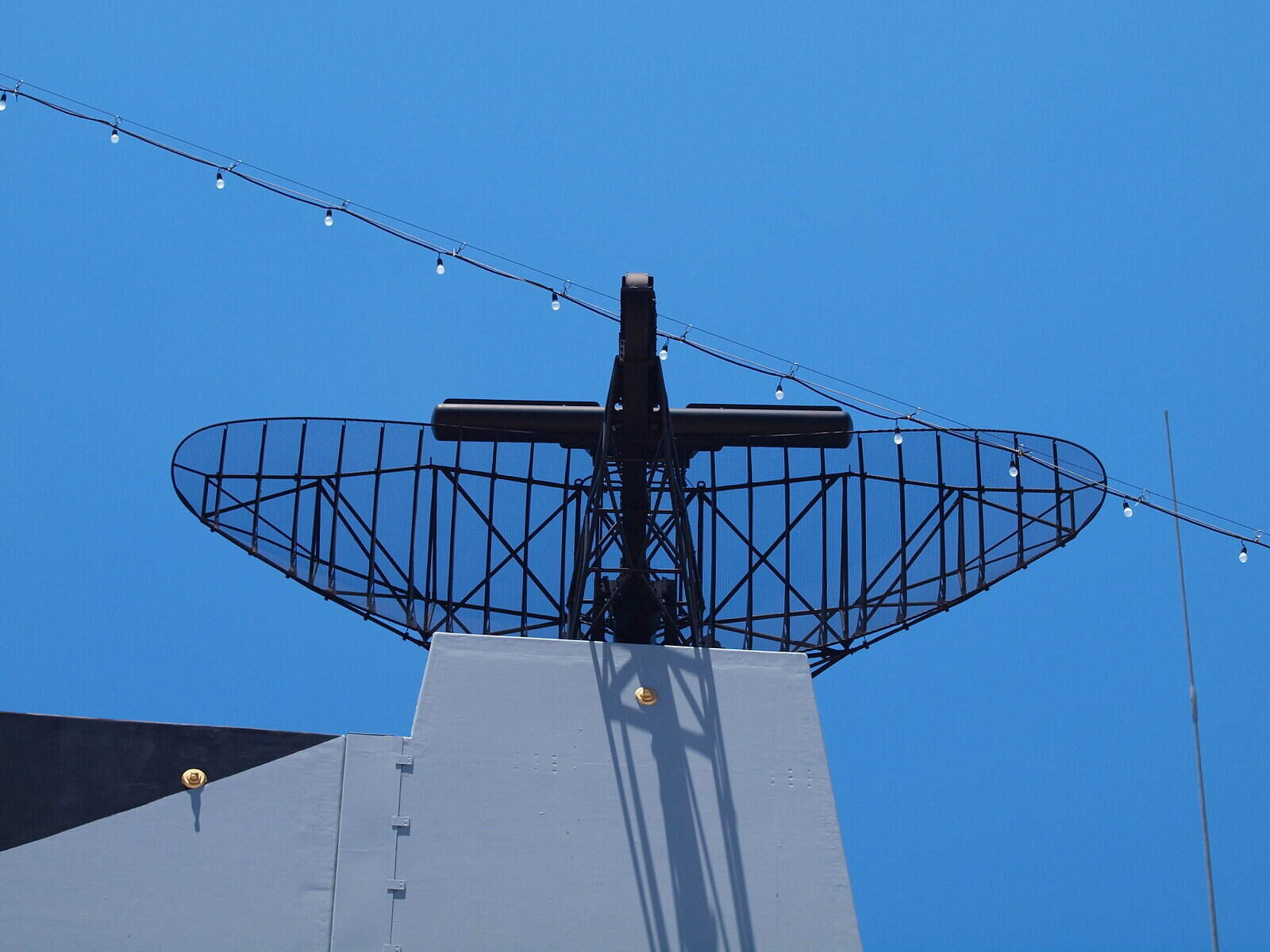
Long-range air monitoring relies on the DRBV-26D Jupiter radar. This is a powerful 2D radar that acts as a ‘stationary lookout,’ scanning an area over 300 kilometers away. Jupiter creates a wide warning zone, allowing the crew to detect large enemy air groups as they approach.

At the same time, to detect the most insidious targets — low-altitude cruise missiles flying just above the sea surface — the aircraft carrier uses the DRBV-15C Sea Tiger Mk2 station. This radar specializes in the lower tier and serves as a target indicator for rapid response systems, detecting objects at a distance of up to 150 kilometers.

The DRBV-26D Jupiter radar. Photo credits: qaz9491 (Hans)

The most important element of the self-defense system is the multifunctional Arabel radar, which operates in the X-band. This phased array radar has ultra-high resolution, which is necessary for accurate guidance of Aster-15 anti-aircraft missiles. Arabel does not simply track the target, but also controls the interception in the middle and final stages of the missile’s flight. The system allows the ship to simultaneously repel complex attacks, focusing on threats within a radius of up to 80 kilometers.

All this data flows into the ‘brain’ of the aircraft carrier — the SENIT combat information system. This central computer instantly aggregates information from all radars, including the new Terma Scanter 6000 navigation stations, which help manage helicopter landings and monitor the situation directly on board.

View of a deck of the Charles de Gaulle aircraft carrier. Photo credits: Marine Nationale.

SENIT combines hundreds of disparate signals into a single tactical picture, allowing the command to see the battlefield without any blind spots.

Despite such a high density of sensors, the Charles de Gaulle still needs the support of E-2 Hawkeye early warning aircraft. Since the physics of the radar horizon do not allow ship antennas to see beyond the curvature of the planet, it is the aviation component that allows supersonic missiles to be detected in time at long ranges.

The ship’s air defense

The first, outer line of defense is provided by its own air group and escort ships. Rafale M fighters create an ‘air curtain’ far from the aircraft carrier, intercepting enemy aircraft and missiles before they approach the strike group.

Launch of an Aster 15 anti-aircraft missile from the Charles de Gaulle aircraft carrier. Photo credits: Marine Nationale.

If the enemy manages to break through the air cover, the ship’s main self-defense system, the SAAM-FR complex, comes into play. It uses Aster-15 missiles, which are housed in 32 Sylver A43 vertical launchers. Guided by the Arabel multifunctional radar, these missiles are capable of intercepting high-speed targets at medium ranges of 10-30 km, creating a reliable dome around the ship.

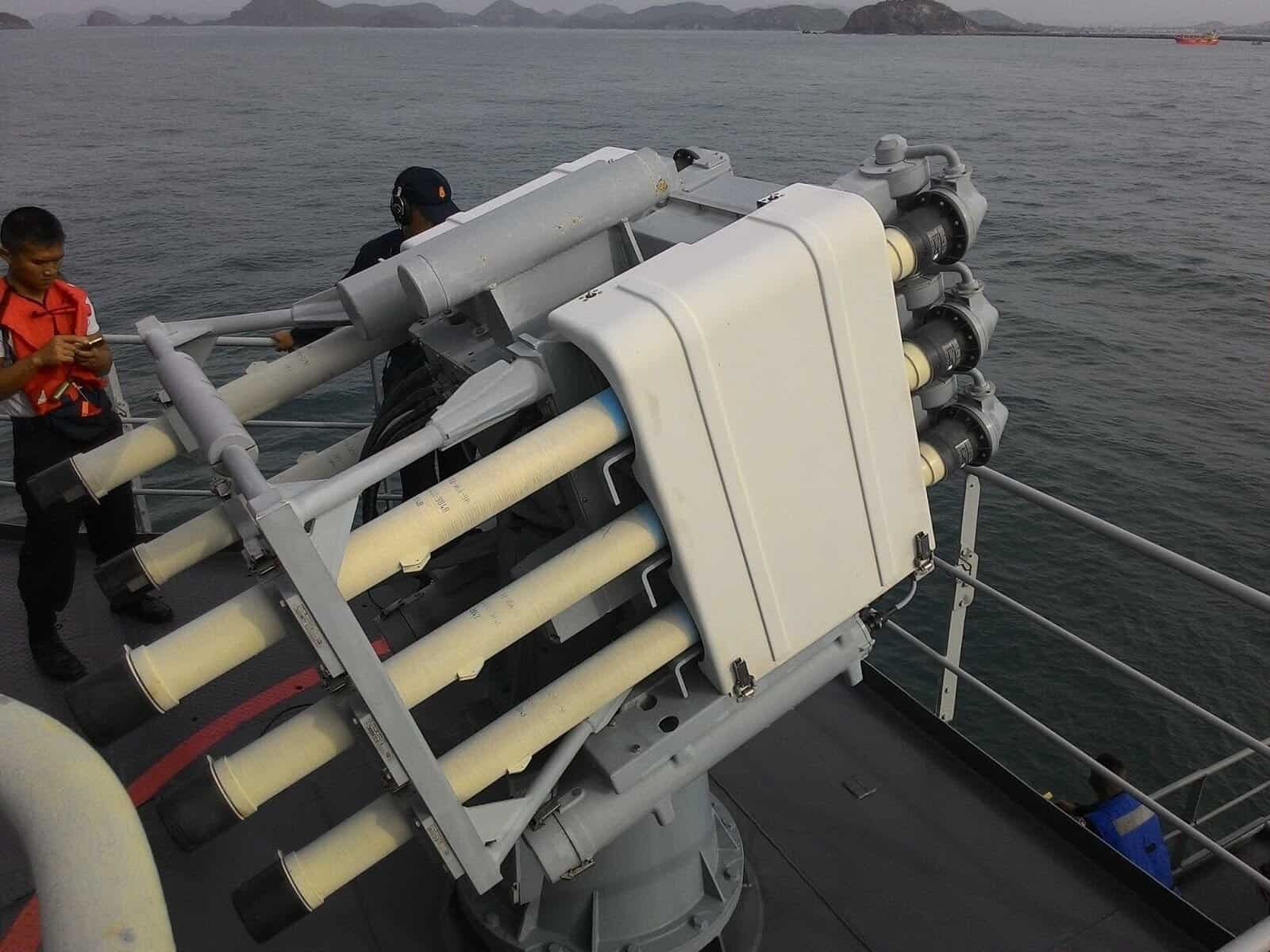
To combat threats that slip through the missile barrier or suddenly appear at low altitude, the aircraft carrier has a ‘final line’ of defense. These are Sadral anti-aircraft missile systems equipped with Mistral missiles and remotely controlled 20 mm Narwhal automatic cannons.

The Sadral Mistral anti-aircraft system. Photo credits: Ministry of Defence of Thailand.

These systems specialize in the instantaneous destruction of objects in close proximity to the ship. Narwhal artillery is particularly effective against high-speed boats and drones, providing protection within a radius of several kilometers.

The ship’s air group

The Charles de Gaulle’s air core usually consists of 30 to 40 units. The main strike force is the Dassault Rafale M deck-based fighters. Depending on the complexity of the mission, 24 to 36 such aircraft are placed on board. Since the ship is equipped with catapults, the Rafale M can take off with maximum ammunition and full fuel tanks, performing the roles of an interceptor, strike aircraft, or reconnaissance aircraft.

A Rafale M carrier-based fighter of the French Navy. Photo credits: French Navy

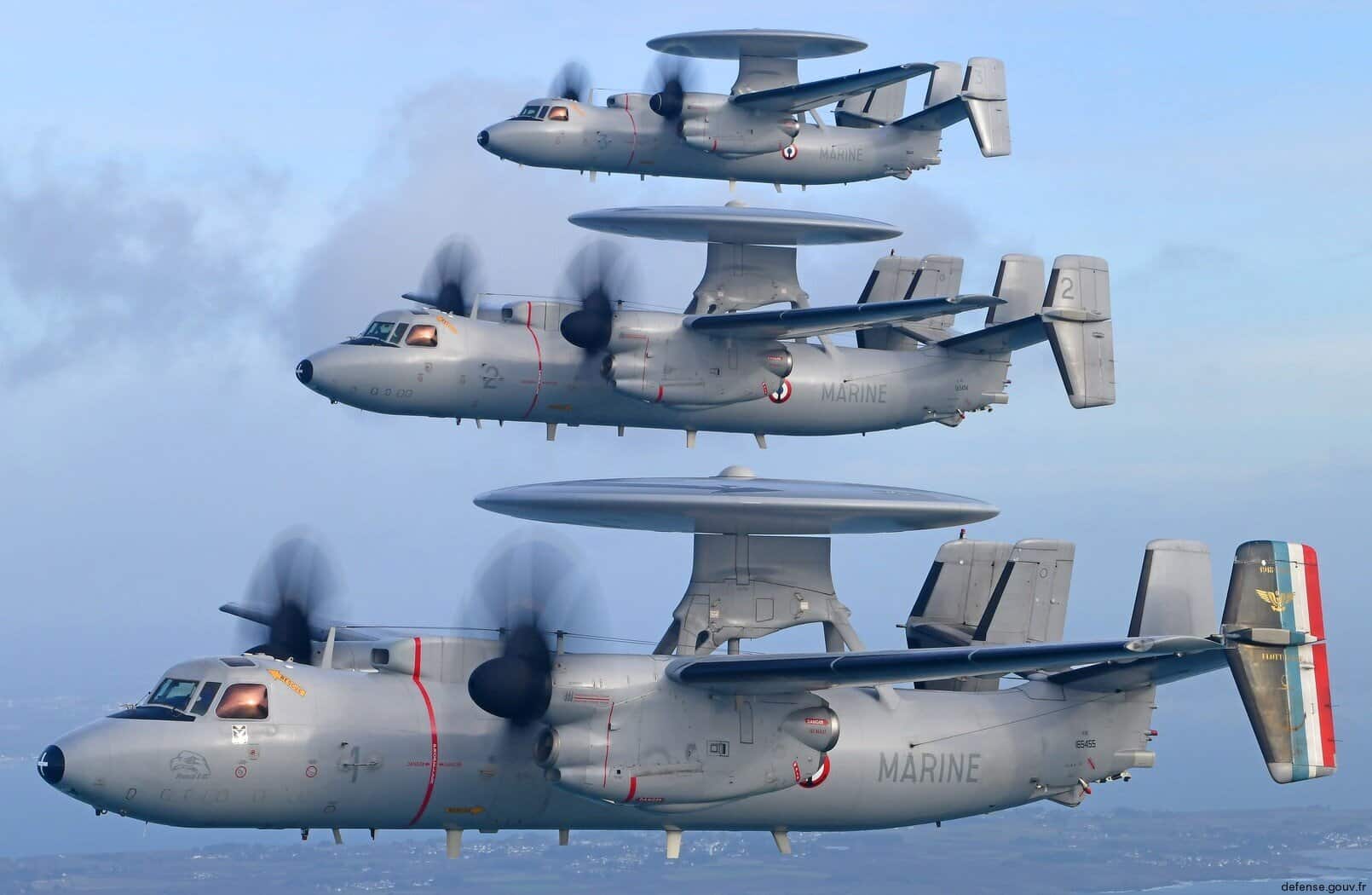
A unique feature of the French aircraft carrier is the presence of E-2C Hawkeye long-range radar surveillance aircraft. France is the only country in Europe that operates these American AWACS platforms from the deck.

Two Hawkeye aircraft operate as flying command posts: they can see air and sea targets at a distance of over 400 kilometers, coordinate the actions of fighters, and warn the ship of threats that its own radars cannot see due to the curvature of the Earth’s surface.

Three E-2C Hawkeye AWACS aircraft of French Naval Aviation. Photo credits: Marine nationale.

The aircraft carrier’s helicopter group ensures the ship’s viability and the safety of its crews. EC725 Caracal and AS532 Cougar helicopters are responsible for search and rescue operations, special forces landings, and logistics between ships in the strike group.

Although Atlantique 2 anti-submarine aircraft operate from coastal bases, they interact closely with the aircraft carrier, transmitting data to the unified SENIT control system.

Italy

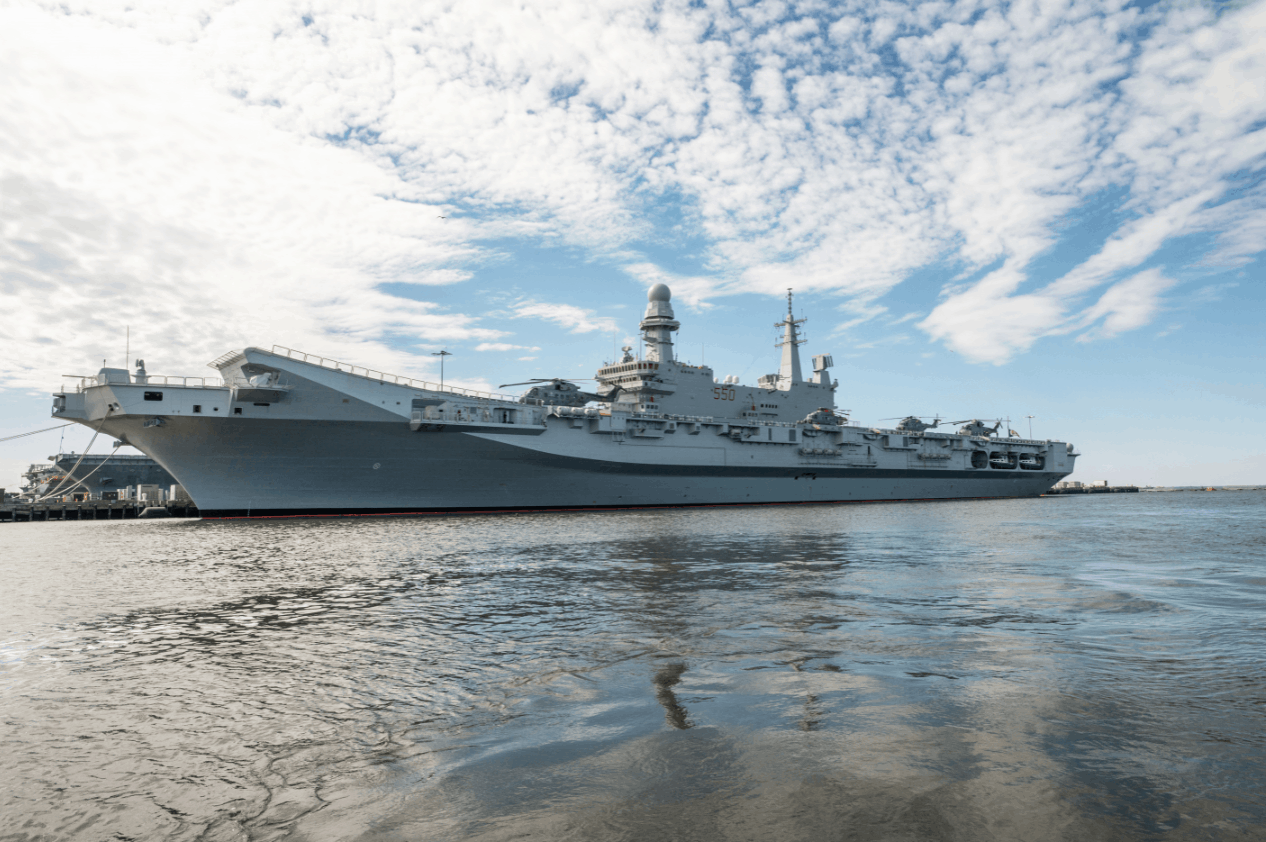
The Italian Navy relies on its flagship, the modern aircraft carrier ITS Cavour. Commissioned in 2009, it remains the country’s largest ship with a full displacement of 33,000 tons and a length of 244 meters.

The flagship of the Italian Navy, Cavour. Photo credits: Italian Navy

The aircraft carrier simultaneously serves as a floating airfield, command center, and landing ship. A special feature of its design is an advanced C4I control system, which allows complex inter-species operations to be coordinated directly from on board.

The ship’s radar equipment

The ITS Cavour aircraft carrier’s radar complex allows the ship to independently monitor the air and surface space for hundreds of kilometers around. Each radar has its own specialization, creating a multi-layered picture of the situation.

The ship’s main ‘eye’ for long-range detection is the RAN-40L radar from Leonardo. This powerful active phased array (AESA) station operates in the L-band, making it ideal for early warning.

The radar is capable of ‘seeing’ air targets at a distance of up to 400 kilometers, while demonstrating high resistance to enemy electronic warfare.

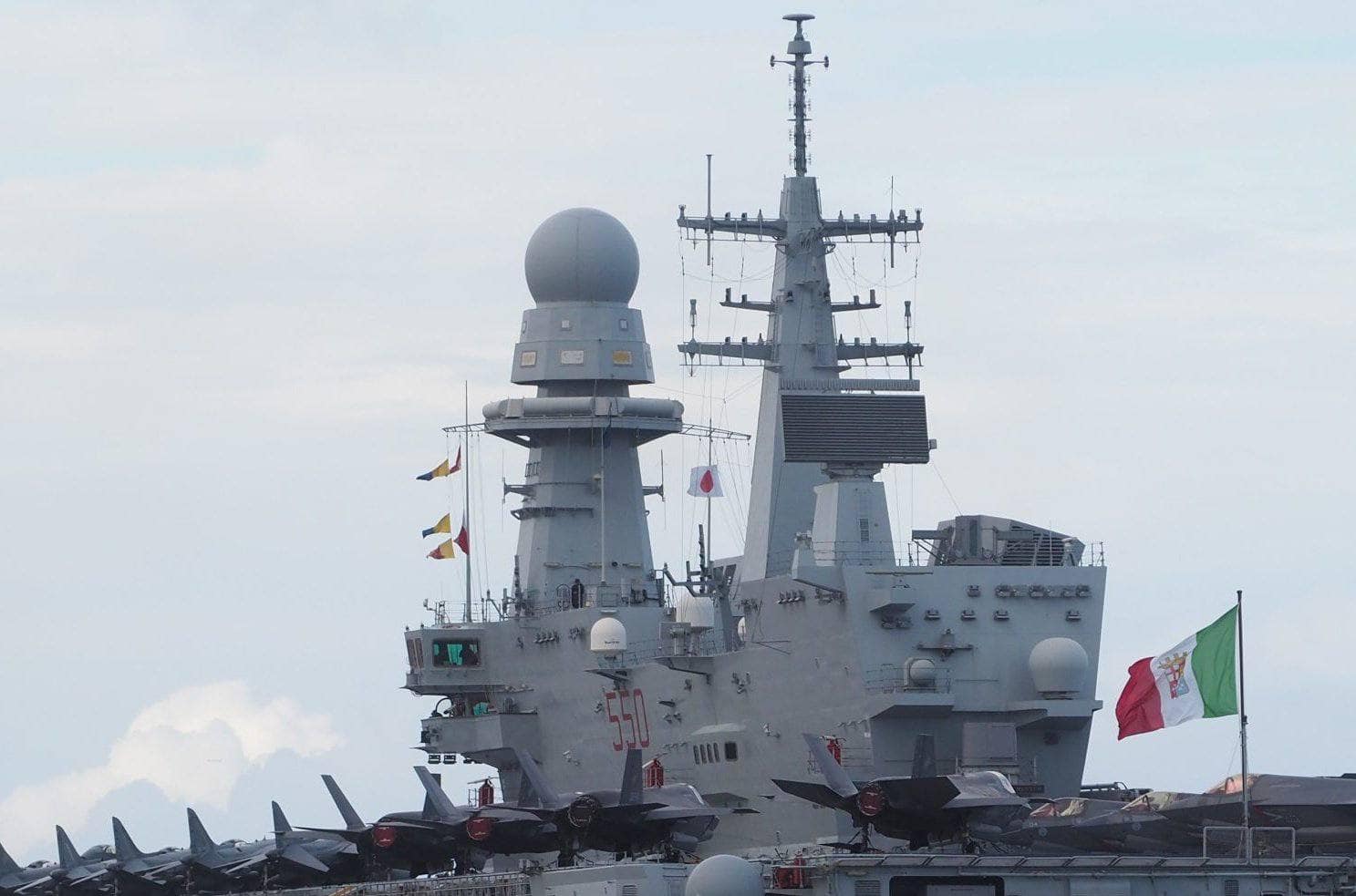
Radar systems on the superstructure of the Italian aircraft carrier Cavour. Photo credits: Italian Navy.

The EMPAR (MM/SPY-790) multifunctional radar provides medium-range tactical control. It is the real ‘workhorse’ of the air defense system: it not only observes but also simultaneously tracks several targets, transmitting data directly to the weapon control system. Its effective range in tracking and guidance modes is about 100–150 kilometers.

To combat the most dangerous targets — missiles flying just above the water — the RAN-30X (SPS-791) radar is used. Operating in the X-band, it provides extremely high resolution, allowing small objects to be detected in time at a distance of up to 100–120 kilometers. This system is complemented by the RTN-25X Orion fire control radar, which guides the ship’s guns with precision accuracy to targets within a radius of up to 25 kilometers.

A unique feature of the Cavour is a powerful set of passive sensors that allow it to ‘see’ without emitting any signals. Leonardo’s SASS system works as a long-range thermal imager, detecting the heat signatures of aircraft and missiles.

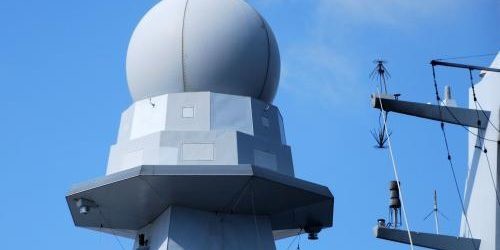
The EMPAR radar station. Photo credits: Leonardo.

Together with the EOSS-100 electro-optical station, it allows the crew to remain in radio silence while maintaining complete control of the situation at a distance of tens of kilometers.

All this information, including data from the MM/SPN-753 navigation radar, which has a range of 74 kilometers, is fed into a single combat system. This architecture makes the Italian aircraft carrier not just a carrier of aircraft, but a full-fledged command center capable of coordinating the actions of an entire fleet in modern warfare.

The ship’s air defense

The Italian aircraft carrier has an extremely dense and technologically advanced defense complex. This multi-layered architecture allows the ship to independently repel massive attacks from the air and sea, largely replicating the concept of the French flagship Charles de Gaulle. The basis of the defensive perimeter is the Sylver A43 anti-aircraft missile system (AAMS), which has 32 launch cells for Aster-15 anti-aircraft missiles.

These interceptors create a safe dome with a radius of up to 30 kilometers, instantly responding to the appearance of a threat. Such firepower allows the aircraft carrier to destroy aircraft and cruise missiles even as they approach the escort ships.

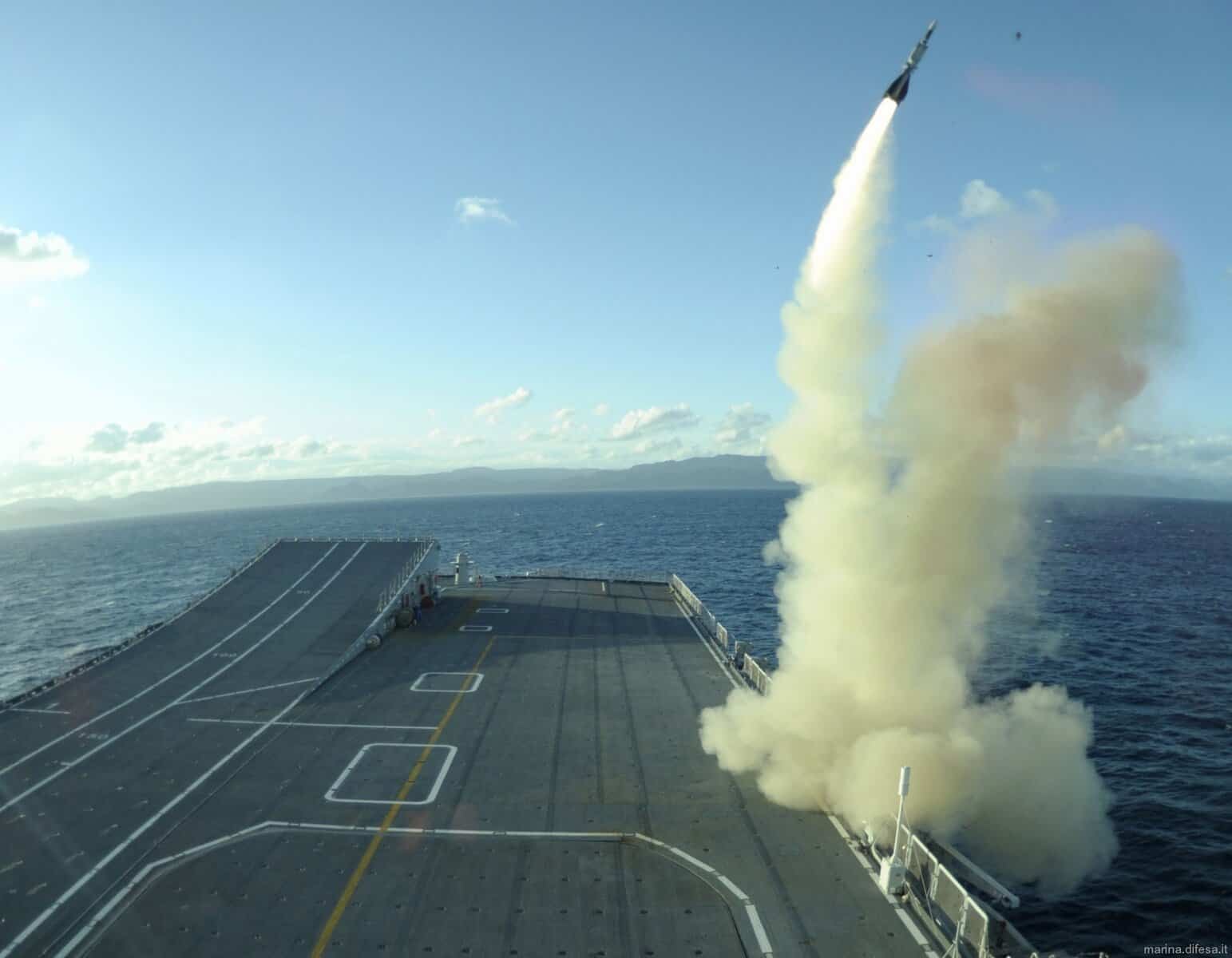
Launch of an Aster-15 anti-aircraft missile from the Cavour aircraft carrier. Photo credits: Italian Navy.

Against targets that have broken through the first echelon, the ship uses advanced artillery with guided weapons. Two 76 mm OTO Melara Super Rapid guns in the Strales version fire sub-caliber guided DART shells.

The ammunition is guided by radio beam and actively maneuvers to ensure the destruction of high-speed missiles at a distance of 6–8 kilometers. The last line of point defense is held by three 25 mm Oerlikon KBA artillery mounts, which create a dense fire curtain within a radius of up to 3 kilometers, suppressing drones or residual fragments of enemy weapons.

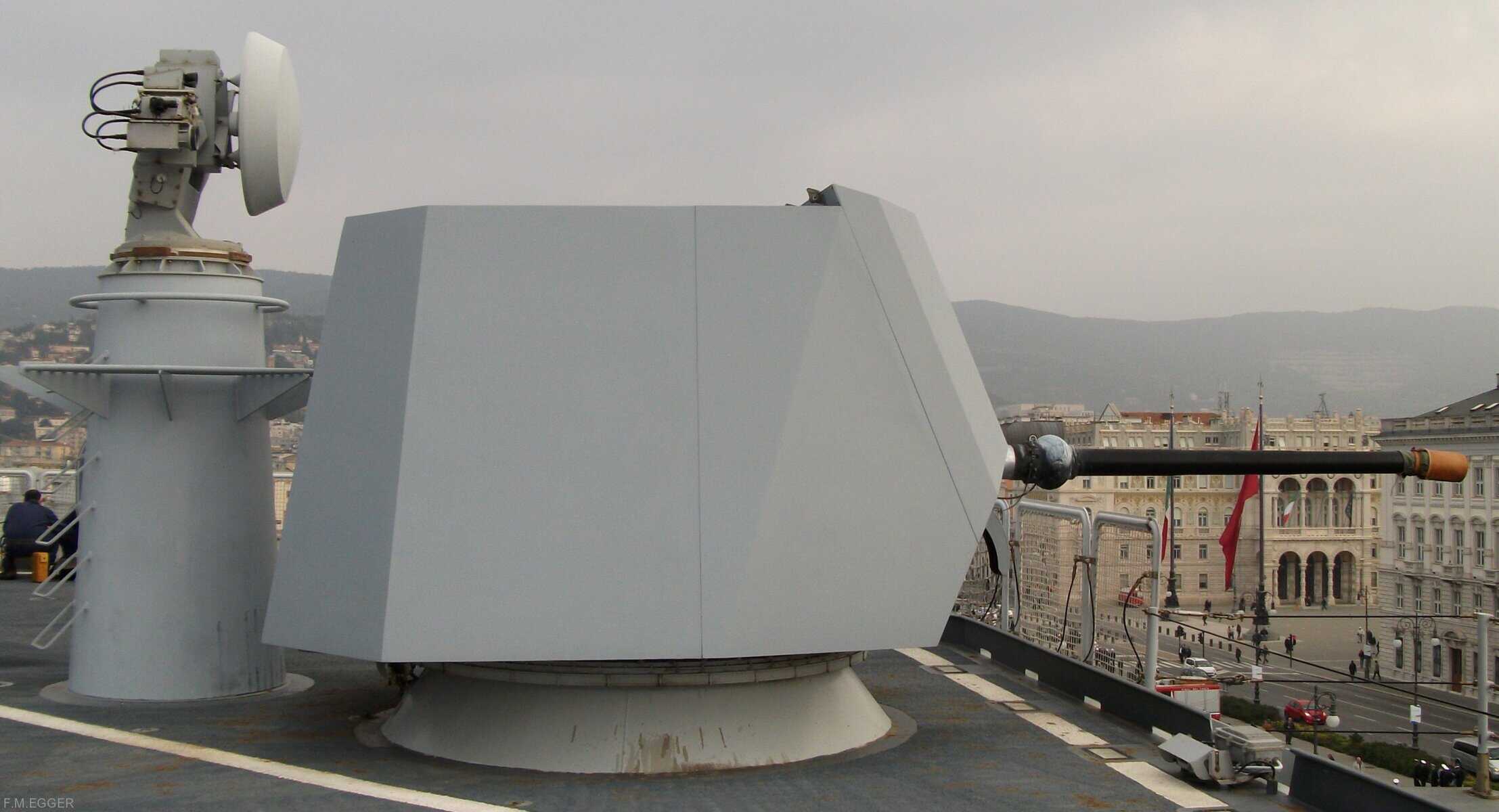
A 76 mm OTO Melara Super Rapid gun on board the aircraft carrier Cavour. Photo credits: Italian Navy.

The effectiveness of active defense is enhanced by a complex of electronic warfare (EW) and passive countermeasures. The Nettuno-4100 system creates active jamming to blind enemy radars, while ODLS installations fire dipole and thermal traps, knocking homing missile warheads off course in the final phase of the attack. All these components are integrated into a single combat information and control system (CICS).

It analyzes data from long- and short-range radars in real time, automatically identifies the most dangerous targets, and selects the optimal method of destruction — from anti-aircraft missiles to electronic warfare. This integration makes Cavour one of the most protected aircraft carriers of our time.

The ship’s air group

The Cavour’s air group is a mobile and flexible unit known as Gruppo Aerei Imbarcati (GRUPAER). According to official data from the Marina Militare, the ship usually carries 18 to 20 aircraft, but this number varies depending on the specific combat mission.

The basis of its strike power is the latest fifth-generation F-35B Lightning II fighter. These aircraft are gradually replacing the older AV-8B Harrier II+ strike fighters, providing the fleet with air superiority, the ability to deliver high-precision strikes, and perform complex reconnaissance.

Italian Navy F-35B fighter jets aboard the aircraft carrier Cavour. Photo credits: Italian Navy.

The Italian Navy has already achieved initial operational capability (IOC) for these aircraft, allowing 6 to 10 F-35Bs to be deployed for real missions.

The helicopter component of the air group is responsible for security and logistics. Large multi-purpose EH-101 (AW101) and medium SH-90 (NH90) helicopters specialize in searching for submarines, combating surface targets, and conducting rescue operations. A huge 134-meter-long hangar allows for the simultaneous servicing of a significant amount of equipment: if necessary, the ship can accommodate up to 12 heavy AW101 helicopters.

An important feature of the Italian strategy is the absence of its own long-range radar surveillance aircraft (such as the French Hawkeye) on board. For early warning of air threats, Cavour relies on cooperation with the Italian Air Force’s G550-CAEW aircraft or on the support of NATO allies.

Europe’s plans for deploying aircraft carrier forces

Europe is currently radically transforming its approach to deploying its aircraft carrier forces, focusing on strategic deterrence in the Indo-Pacific region. The UK has been building a system of permanent presence in these waters for years to limit China’s expansion. The main advantage of the British fleet is that it has two identical giants, which allows it to keep at least one ship in constant combat readiness.

The effectiveness of this model was clearly demonstrated by an incident in August 2022. At that time, the aircraft carrier HMS Prince of Wales sailed to the US coast for important tests of F-35B aircraft, but almost immediately suffered a serious technical accident.

A broken right propeller shaft forced the ship to stop near the Isle of Wight for an emergency inspection. The situation could have disrupted strategic plans, but the British command simply replaced the faulty ship with the flagship HMS Queen Elizabeth. The crew quickly transferred to the other ship, and training continued without losing momentum, proving the viability of the two-aircraft carrier concept.

France presents a completely different picture, as its naval power rests on a single aircraft carrier, the Charles de Gaulle. Despite its high efficiency, the lack of a backup creates significant gaps in the country’s operational capabilities.

This became particularly noticeable after the completion of the intensive Operation Chammal off the coast of Syria. The French aircraft carrier group then delivered devastating strikes against terrorist positions, but the continuous operation of the ship’s systems in combat conditions depleted its technical resources. As a result, the aircraft carrier underwent lengthy repairs and modernization, which effectively left Paris without carrier-based aviation for many months. This vulnerability is forcing France to seek closer cooperation with its neighbors and accelerate the development of a new generation PA-NG aircraft carrier.

In this situation, Italy is trying to copy the British approach to strengthen its role in the Mediterranean and beyond. The fleet has already fully integrated fifth-generation fighters onto the aircraft carrier Cavour and is preparing the amphibious assault ship Trieste for full service.

Thanks to its ski jump and ability to accommodate F-35B aircraft, the Trieste will be able to back up the main flagship if necessary. This is setting a new European standard, where having a reserve deck is not a luxury but a prerequisite for maintaining the status of a maritime power. Joint exercises and the interchangeability of crews and equipment between Britain, Italy, and the US effectively create a single aircraft carrier umbrella that allows European countries to project power at any distance from home.

Conclusion

Europe is now forming a powerful maritime fist capable of projecting power far beyond the Atlantic. The combined potential of British, French, and Italian aircraft carriers enables NATO to create a serious counterweight to Chinese expansion in the Indo-Pacific region. However, the real success of this strategy depends not only on the number of decks, but also on the complex logistics and political will of the participating countries.

The British command has already identified the Indo-Pacific vector as a priority, implementing regular cruises of an aircraft carrier group led by HMS Queen Elizabeth or HMS Prince of Wales. These missions are intended not only to demonstrate the flag, but also to work out high-intensity scenarios together with Japan and Australia. France, despite the limitations of having only one ship, is also strengthening its presence through strategic missions, integrating its fleet into joint operations with India and Singapore. Italy, having completed the large-scale deployment of the aircraft carrier Cavour, has demonstrated the ability of European forces to operate autonomously over vast distances, calling at the ports of Tokyo and Darwin.

The main challenge remains maintaining technical readiness. Aircraft carriers require enormous resources: while one ship is performing a combat mission, another is usually undergoing modernization or scheduled maintenance. To avoid gaps in their presence, European states are betting on the concept of ‘interchangeability.’

This means that Italian F-35B aircraft can take off from British decks, and partner logistics ships provide fuel and supplies to the entire coalition group. This approach mitigates the problem of a shortage of support ships and allows for crew rotation without the entire group having to return to European ports.

Joint exercises such as Noble Flight or Pitch Black, where European pilots and sailors learn to interact with the Japanese Self-Defense Forces and the Australian Navy, are of particular importance.

The main goal is the full technical integration of communications and fire control systems. When a British aircraft carrier exchanges data with a Japanese destroyer in real time, a single information network emerges, making Chinese detection capabilities less effective. Europe’s plans for 2026 are to turn these isolated visits into a permanent rotation system, where European aircraft carrier groups will become an integral part of the security architecture of the entire Pacific region, working side by side with the fleets of Singapore and the United States.

SUPPORT MILITARNYI

PrivatBank ( Bank card )
5169 3351 0164 7408
Bank Account in UAH (IBAN)
UA043052990000026007015028783
ETH
0x6db6D0E7acCa3a5b5b09c461Ae480DF9A928d0a2
BTC
bc1qv58uev602j2twgxdtyv4z0mvly44ezq788kwsd
USDT
TMKUjnNbCN4Bv6Vvtyh7e3mnyz5QB9nu6V
Articles
Popular
Button Text