


60 by 60 in transforming space into a modern warfare environment

60 by 60 in transforming space into a modern warfare environment

Valerii Zaluzhnyi

Valerii Zaluzhnyi

October 6, 2025
07:46
Remote sensing satellite Sich-2-1. Photo credits: Pivdenne Design Office
News

60 by 60 in transforming space into a modern warfare environment

Valerii Zaluzhnyi

Valerii Zaluzhnyi

October 6, 2025
07:46
Remote sensing satellite Sich-2-1.
Remote sensing satellite Sich-2-1. Photo credits: Pivdenne Design Office

On February 27, 2024, almost two weeks after my dismissal from the post of Commander-in-Chief of the Armed Forces, a notable article was published in a Russian scientific publication.

Despite constant criticism of my interest in studying Russia, the facts speak for themselves: my background and biography do not give any grounds for claims of sympathy for that country. At the same time, studying the capabilities and behavior of the enemy is useful and necessary, especially if our survival depends on it.

I was inspired to return to this article by recent information in Ukraine about intentions to create Space Forces by the end of 2025.

“Ukraine plans to form the Space Forces by December 31, 2025, which is enshrined in the government’s activity program. By the end of 2025, Ukraine aims to achieve 60% operational readiness of integrated air and missile defense, cyber and space components,” the Cabinet of Ministers of Ukraine wrote in a statement.

The figure of 60% also attracted attention because in the same May 2024, completely different news appeared, which painfully attacked the consciousness:

“The General Staff of the Armed Forces of Ukraine has made a decision on optimization. There plan to reduce the number of staff by 60%. This was announced on Friday, May 24, by the head of the Main Department of Defense Planning of the General Staff of the Armed Forces of Ukraine.”

Later, on July 30, the military units that ensured the work of the Central Directorate of Space Support of the General Staff of the Armed Forces of Ukraine were disbanded. And on August 15, 2024, this department was completely liquidated with the complete impossibility of restoring its capabilities.

As in the case of the creation of the army corps, I must remind you that any changes that occur during war, especially in military organization, must be not only requested, but also, most importantly, timely. Such decisions require not only resources, but also time, which is in short supply during war.

Russian experts, with their inherent Soviet style, like some of our figures, of course, attribute victories to themselves and shift the problems onto their predecessors or their enemies. However, the logic of describing events is quite interesting.

So, what the Russians write, summing up the two-year campaign in Ukraine.

Literally translated into Ukrainian, it sounded like this:

“….From the very beginning, the colossal intelligence capabilities of the West were put into service of the Armed Forces of Ukraine, which provided an advantage in intelligence and targeting. This is especially true of space intelligence, which is provided by a complex of Western military intelligence satellites and numerous commercial Western satellite companies – suppliers of geo-imagery… 155-mm modern long-range artillery and HIMARS and MLRS ground-based missile systems with high-precision GMLRS missiles with a range of up to 90 km, which began to be used at the end of June 2022, in combination with the above-mentioned reconnaissance, targeting and network-centric means of communication, control and data transmission, allowed the Ukrainian side to gain fire superiority and high-precision long-range strike capabilities in the second half of 2022, which significantly complicates the situation of the Armed Forces of the Russian Federation.”

At one time, when describing the reform of the command system, I mentioned that at that time, as also now, the problem that significantly reduced the effectiveness of command of troops was the lack of an intelligence management authority at the strategic level and, accordingly, a set of forces and means.

The critical point in this problem was the emergence of the latest weapons. The only fact of receiving such weapons turned out to be not enough. After all, the very idea of ​​discovering the object, its reconnaissance, and the preparation of initial data for the destruction itself required one thing – our immediate decision to organize the exchange of intelligence information in real time. I draw attention specifically to the timing of the exchange, because, having modern means of destruction, the armed forces did not have the necessary information to inflict such damage, and the information they received through dedicated channels could not always be used, because its timeliness did not stand up to any logic.

The General Staff, of course, did not have and does not have such an authority, as well as the functions of intelligence support. Logically, that precisely due to the lack and delay in the exchange of specific information from space it was not possible to use the full potential of systems such as HIMARS. Later, due to Russia’s reaction, their strategic importance significantly decreased. As it turned out, it is space capabilities that provide critical importance for targeting, navigation, and communications, ensuring the effectiveness of missile strikes. And if the connection problem was already solved thanks to Starlink from SpaceX, and the navigation problem required both time and resources, so timely reconnaissance and time-coordinate support were necessary already.

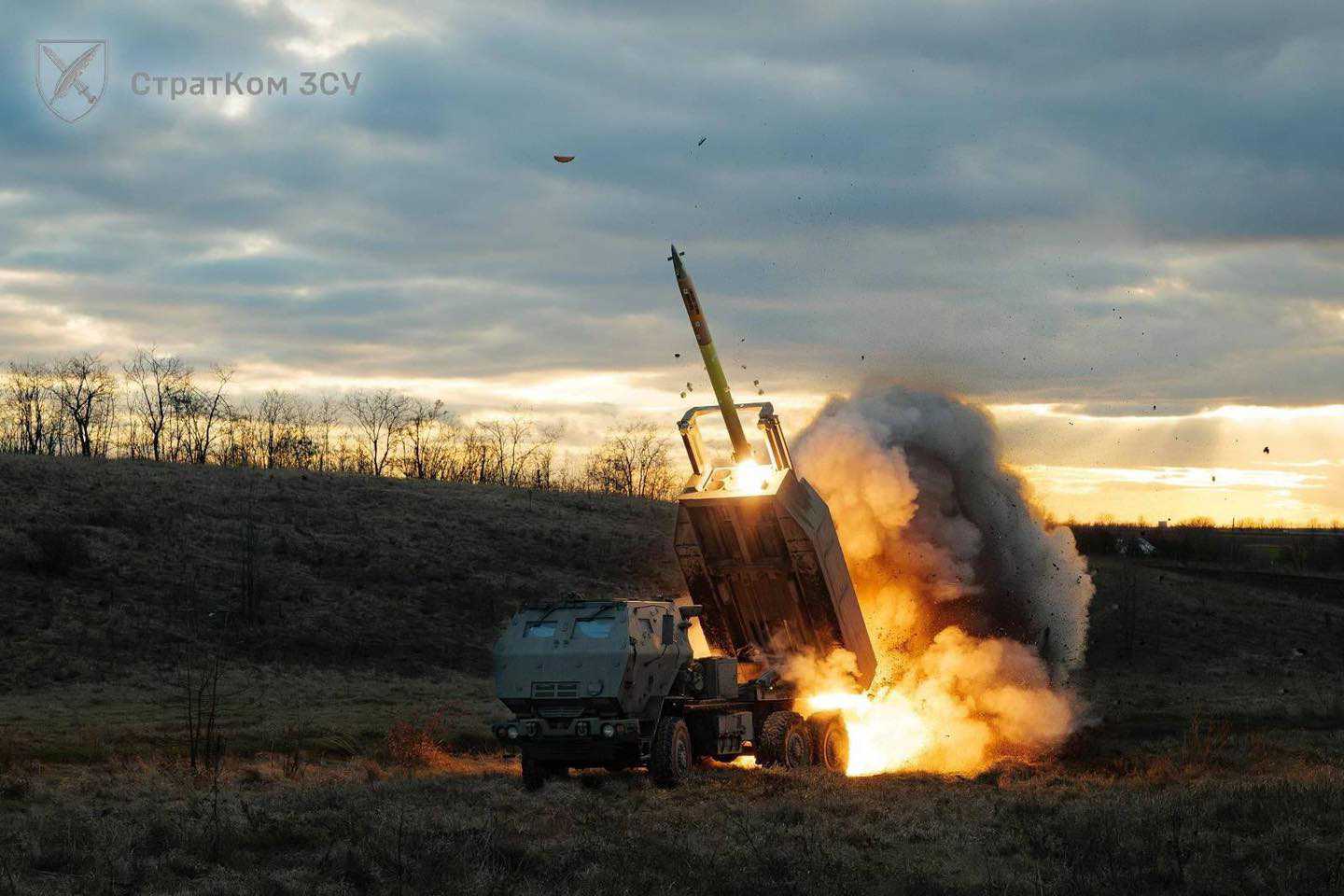
Illustrative photo of Ukrainian M142 HIMARS.

Of course, the lack of our own space systems also led us to a state of absolute dependence on the very possibility of delivering sudden and effective strikes, because it forced us to apply the full cycle of preparation and processing of space information precisely through partner structures.

The paradox. We were actually planning and working with resources we didn’t have. All of this forced us to think quickly and find solutions, as always, beyond our capabilities.

This path began in March 2022 with the use of the capabilities of the State Space Agency in the interests of the Armed Forces of Ukraine, of course, with the full support and capabilities of the Main Directorate of Intelligence of the Ministry of Defence. And already in December 2022, after starting cooperation with one of the leading Western companies in the field of programming for database analysis, began to form the Central Directorate of Space Support of the General Staff of the Armed Forces of Ukraine.

Early 2023 there were approximately 7,560 active satellites in orbit, of which 246 were officially classified as military. Russia maintained about 160 active satellites, of which about 100 performed military functions, such as providing precise navigation through the GLONASS system and satellite reconnaissance using the “Persona”.

We were interested in the military space sector, namely satellite reconnaissance, surveillance, secure communications, early warning systems about missile launches, and navigation. Of course, such a range of tasks is fully carried out and controlled by state institutions, such as the United States Department of Defense, Roscosmos, or the Military Strategic Command of the People’s Liberation Army of China. We were far from them.

However, already in the summer of 2022, we drew attention to the interesting role of private companies. Because it was their activities that actually did not establish boundaries between commercial and military functions in space and gave us a chance to implement what was necessary.

Later, the Russians will write: “From the very beginning, the colossal intelligence capabilities of the West were put into service of the Armed Forces of Ukraine, which provided an advantage in intelligence and targeting. This is especially true of space intelligence, which is provided by a complex of Western military intelligence satellites and numerous commercial Western satellite companies – suppliers of geo-imagery.” It is about using the capabilities of satellites that were created for civilian or commercial use.

Today, it is impossible to imagine modern armed struggle without space services. Our war was the first major military confrontation in which space technologies played and continue to play a decisive role. Therefore, the creation of such a center was not only obvious from the point of view of using opportunities, but also the need to create asymmetry in relation to Russia.

The ever-increasing flow of information and the need to distribute it revealed another problem – training personnel to process such specific information. Practical acquisition of skills also takes time, but by the end of 2023 we managed to prepare a sufficient number of trained personnel both in the center and in the operational level. This process, thanks to our partners, was accompanied by the provision of appropriate equipment and the creation of a system that shifted the main problem – bringing space information directly to the battlefield and, most importantly, to modern means of destruction.

Thus, the Central Space Support Directorate, having received a tool in the form of the use of satellite technologies for both military and civilian purposes and access to software, essentially became the key authority that transformed data from space into specific combat decisions and, accordingly, provided a strategic advantage, especially in delivering precise strikes against the enemy. And most importantly, the Armed Forces of Ukraine gradually got the function of their own intelligence support. Unfortunately, as subsequent events showed, this was temporary.

So, without our own military satellite constellation, we use on time commercial space infrastructure, including SpaceX’s Starlink for communication, and Earth observation satellites such as Maxar, Planet Labs, and ICEYE for real-time intelligence.

However, almost a year and a half of work on trying to build an effective system of intelligence support for the Armed Forces of Ukraine and space support revealed a number of problems that remained a heavy burden in the warring country. The main one is that on time we found and learned to use the opportunities we found, but we didn’t have any of our own.

Our country, which was once one of the top five space powers in the world, is now lagging behind in the rocket and space sector, to put it mildly. Even SpaceX’s modern military-space infrastructure has been constantly influenced by Russia on our eyes and was forced to effectively adapt. There is no point in talking about adapting our own space infrastructure.

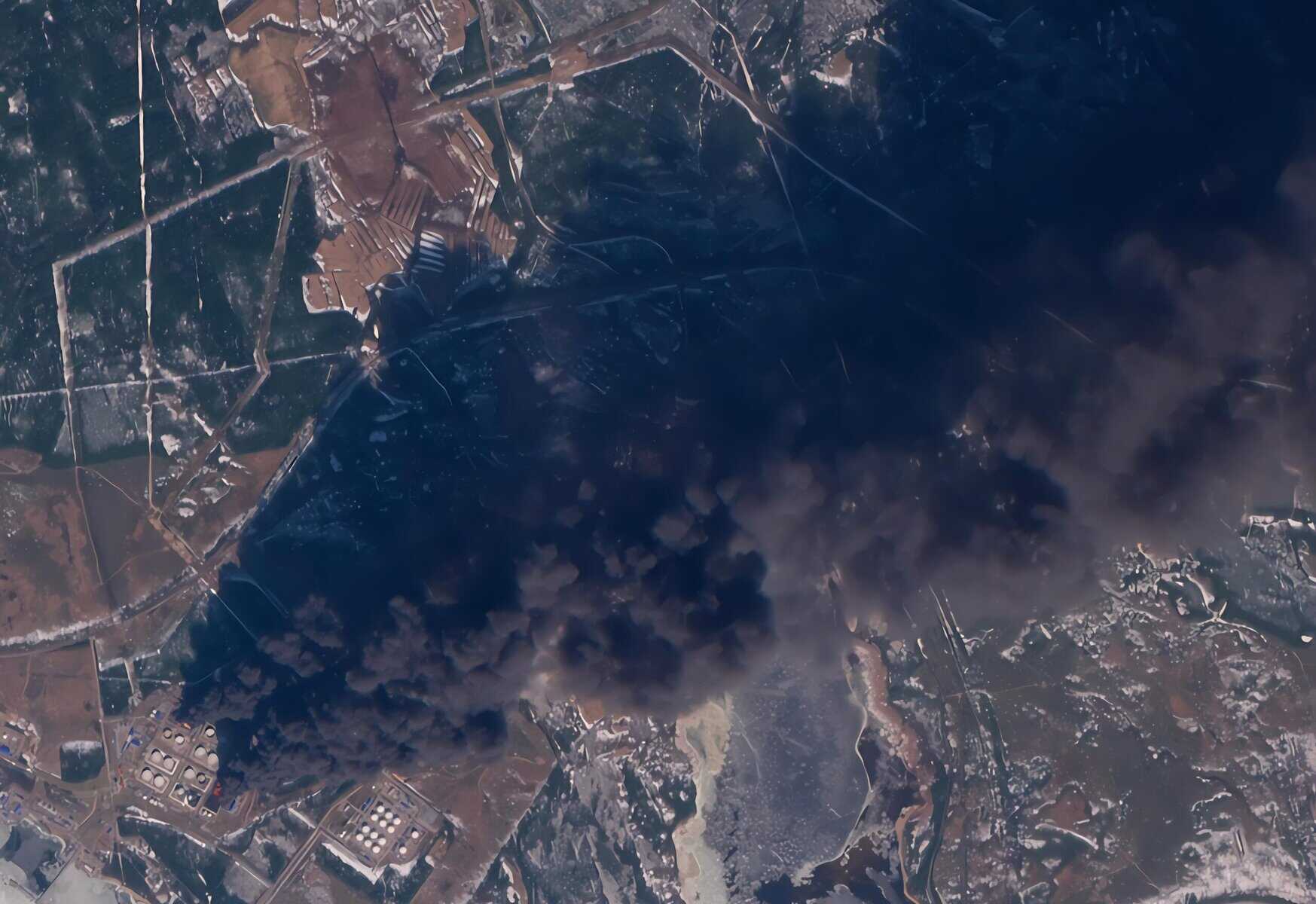
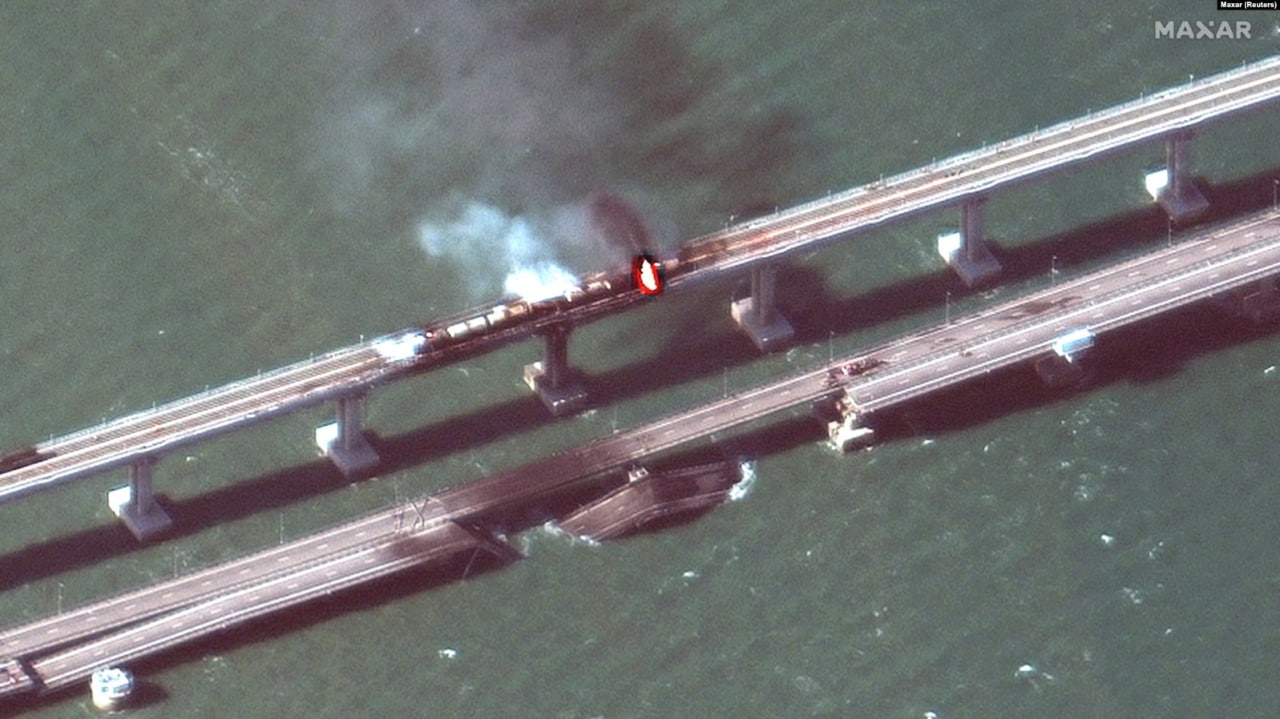
Incendio en el puente de Crimea, 8 de octubre de 2022

Such space infrastructure should include orbital launch rocket systems, orbital objects, ground-based complexes, and regulatory mechanisms. It is this infrastructure that provides telecommunications, navigation, intelligence, and as a result, national security. Therefore, the absence of any of these elements encourages either the creation and use of one’s own capabilities, or the use of others. All this revealed a huge problem of dependence on partner countries and the political situation in them. Reliance on foreign aid also creates risks to autonomy and efficiency – both in matters of public warning and in decision-making on the battlefield. This dependence on satellite data supplies sometimes becomes an element of pressure on our country.

We have already seen first the ban, and then the resumption of the transmission of intelligence, first of all, satellite information from our partners. This may be acceptable when planning missile strikes, where neither the outcome nor the impact of the strike is known in order to plan the next strike, but it is completely unacceptable in the matter of notifying about strategic aircraft takeoffs or missile launches.

In July 2025, the first massive global outage of the Starlink communication system occurred, and on September 15, 2025, Starlink temporarily “lay down” across the entire front line. All this demonstrated our blatant vulnerability.

Another crucial indicator of technological lag and dependence in the field of space technology was the Russian attack on Dnipro with the Oreshnik ballistic missile in November 2024. The use of this type of weapon is intended for the delivery of both nuclear warheads and ballistic missiles in conventional equipment. To neutralize such a threat, it is necessary to have either a similar system, or a system that fixes the start of such a missile, calculates its trajectory and determines the area of ​​impact, and finally – a long-range missile defense system.
All this, due to the lack of developed rocket and space technologies today, of course, requires at least a decision on what to do next.

Presumably, today space should soon become another domain where we need to achieve key technological changes. On land, in the air, and on water, we have already found these solutions – I don’t want to describe how. It’s time to look into space, because the only possibility today to achieve the required level of security lies only in technological advantages in all domains.

Therefore, of course, the decision to create the Space Forces by December 31, 2025, provided for by the government program, although belated, is still relevant. It is very good that the war itself, its high-tech nature, and even more – future security threats, finally dictate the need for the immediate development of national aerospace technologies and capabilities as a key element of our country’s defense capability. However, when forming state policy in the field of space technologies, based on own experience, we can highlight several important aspects.

The Armed Forces of Ukraine, despite the 4th year of large-scale aggression and 11 years of war, in accordance with the Law of Ukraine on Intelligence Agencies, still do not have their own functions regarding intelligence activities at the strategic level. Despite the fact that the Armed Forces of Ukraine have models in their arsenal, including their own production, that have long been capable of inflicting damage far beyond the capabilities of reconnaissance of a separate reconnaissance battalion. Intelligence data for planning such a strike and control of the passage of such means, while is functionally located outside the Armed Forces of Ukraine. Therefore, it is currently impossible to analyze the impact of such a strike and properly plan the next one.

Therefore, the use of space forces, first of all, reconnaissance capabilities, will require regulatory consolidation of this function, both for further funding and for the creation of a relevant management level at the strategic level in the structure of the Armed Forces. It is not yet possible to say whether this is foreseen in the mentioned decision, but the exchange of intelligence information clearly needs changes.

Despite the obvious acquisition of intelligence support functionality by the Armed Forces of Ukraine, at least for own needs, for the comprehensive mastery of space capabilities, it is necessary to develop a space support strategy, that will allow to have own constellation of spacecraft and ground equipment in the future to create not only a surveillance system, but also navigational, meteorological support and own satellite communication system. Only all this will make it possible to enjoy all the benefits of space.

Considering space as a way to gain operational advantage, the creation of the Space Forces must be guaranteed by endowing them with the full range of capabilities. It is necessary to envisage the creation of a single, rigid structure for managing space activities with the minimization of subjects of influence. This means immediately forming regulatory mechanisms that are impossible without reforming the regulatory framework or will resemble attempts to create cyber troops that were not able to enter the previously distributed sphere.

Despite the fact that the obvious priority will be to create own group of spacecraft, at this stage it is still necessary to make the most effective use of the capabilities of both partners and non-state private companies. Such a direction will require diplomatic efforts for a full and reliable partnership. This, in turn, requires a separate direction of international cooperation, which will go beyond traditional military cooperation, and granting the right to engage in such activities to the Space Forces command.

So space is not just technology, but also the key to operational advantage. But its effective use will require a systematic approach, from institutionalization of production programs to international cooperation.

By the way, according to one authoritative publication, by 2035, 60% of the space economy’s revenues will be generated by five key industries: logistics, food processing, defense, consumer goods and digital communications, which are increasingly dependent on space technology.

SUPPORT MILITARNYI

PrivatBank ( Bank card )
5169 3351 0164 7408
Bank Account in UAH (IBAN)
UA043052990000026007015028783
ETH
0x6db6D0E7acCa3a5b5b09c461Ae480DF9A928d0a2
BTC
bc1qv58uev602j2twgxdtyv4z0mvly44ezq788kwsd
USDT
TMKUjnNbCN4Bv6Vvtyh7e3mnyz5QB9nu6V
Articles
Popular
Button Text