
Diehl Defense is completing the development of a new CICADA interceptor and plans to deploy it this year.
At the World Defense Show, the company told Militarnyi that the system is being developed in conjunction with ground sensors that detect threats, after which the interceptor is launched.
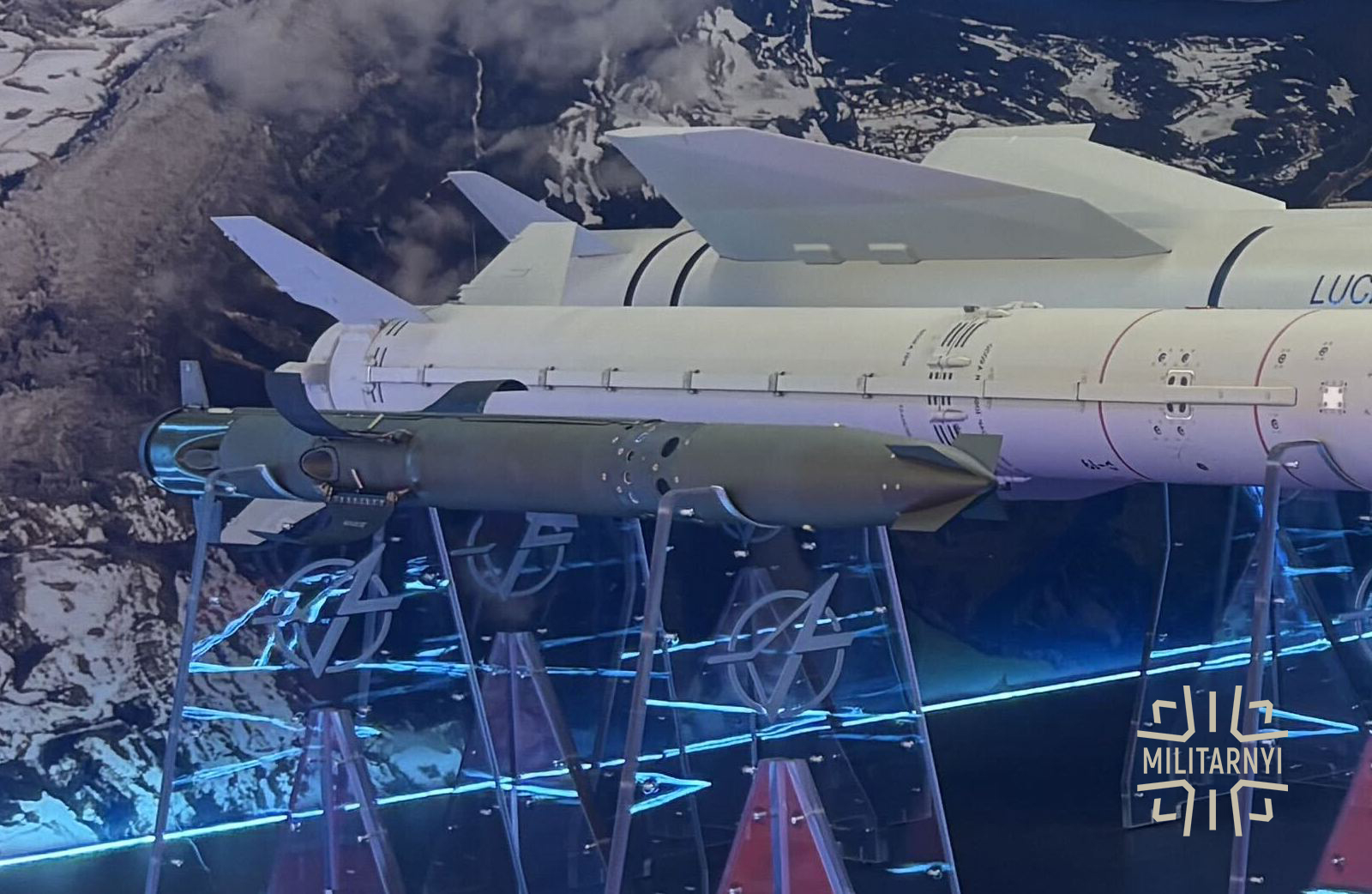
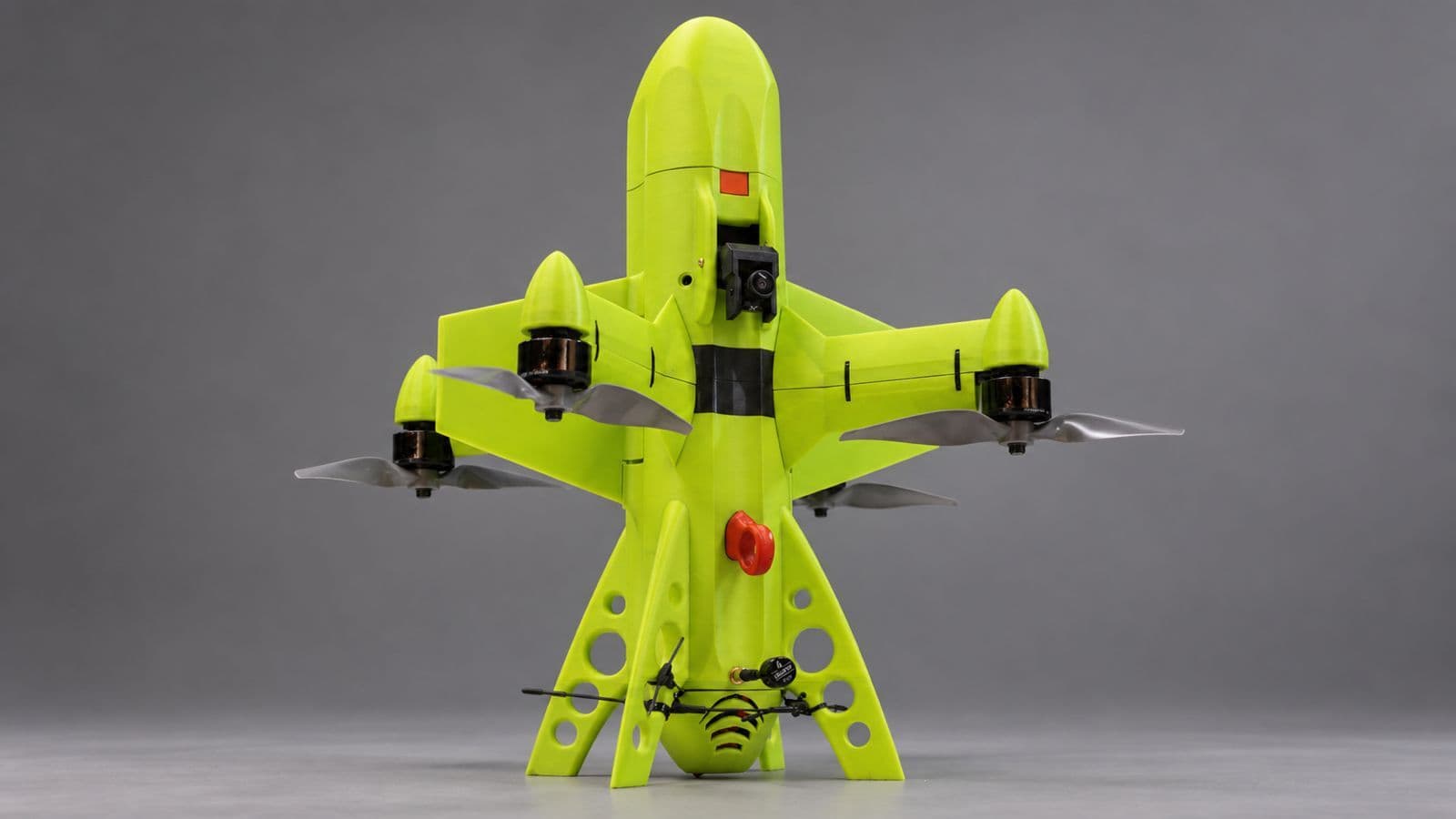
CICADA has a unique pyramidal shape thanks to four delta-shaped wings folded along the fuselage. The missile is 700 mm long and 300 mm in diameter.
The propulsion system is based on a solid-fuel rocket engine, which provides an initial speed of about 1,000 meters per second. Its operating time allows it to achieve a range of 8 to 12 kilometers at an operating altitude of up to 5 kilometers.
“We don’t call it a drone — we call it a missile,” says Diehl Defense.
The interceptor does not hover in the air, but flies directly from point A to point B.
“The threat is detected, we receive the target coordinates via a communication channel, fly to it, and have two different types of payloads to destroy the target,” the company explains.
For military use, a fragmentation warhead has been developed for the interceptor to destroy the target.
A non-lethal version has also been created — a net launcher that captures the drone and brings it down to the ground with a parachute. In this scenario, the missile can be reused.
“You just insert a new net cartridge and you’re ready to go again,” the developers said.
However, this is not yet a fully finished product. The interceptor is in the final stages of development, and the company expects to deploy it this year.
CICADA is said to be capable of working with various radars, but the developers are striving to integrate it into the most modular system possible — essentially a flexible “sensor-to-shot” chain.
“All you need is a control system: you see the threat, decide to neutralize it, press the button, and the missile takes off. Everything else happens completely autonomously,” Diehl Defense said.
A radar homing head is installed in the nose of the interceptor, which provides the final stage of destruction.
At the same time, a direct hit is not necessary — the interceptor approaches the target, after which the warhead is activated.
“You can have a battery of several missiles in a mixed configuration: some with fragmentation warheads, some with nets. It all depends on the scenario,” the company concluded.
CICADA weighs less than 10 kg. When inactive, it is stored in a container that also serves as a launcher.
If a threat is detected by radar, the control system identifies the type of target and launches the appropriate version of the missile.
Recently, the British company Drone Defence also developed a new anti-drone system called AeroStrike.
Підтримати нас можна через:
Приват: 5169 3351 0164 7408 PayPal - [email protected] Стати нашим патроном за лінком ⬇
Subscribe to our newsletter
or on ours Telegram
Thank you!!
You are subscribed to our newsletter