Popular
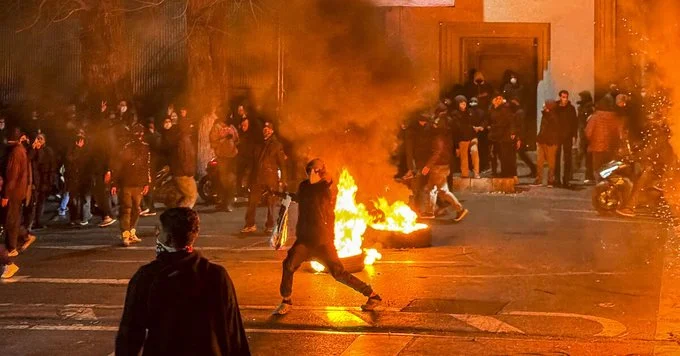
There are growing fears that the number of protesters killed by Iranian security forces is in the thousands, according to TIME. Despite the internet shutdown, mobile phone footage has emerged showing machine guns mounted on trucks firing into residential streets, hospitals overflowing with shooting victims, and morgues filled with hundreds of bodies after just one night of attacks.

To explain how they arrived at the “significant” number of casualties, the Islamic Revolutionary Guard Corps on Sunday raised the threat level of ISIS, stating in a statement that the protesters who were killed were terrorists hired by Israel and the United States. Two days earlier, a representative of the Guard warned on state television that anyone who took to the streets should be prepared to “take a bullet.”
The exact number of deaths cannot be determined. Estimates provided by reputable human rights organizations have reached into the hundreds, but these organizations only count identified bodies, and the painstaking work is complicated by communication blackouts that extend to mobile phones and even landlines.
However, based on reports from several Tehran hospitals, an informal group of émigré academics and professionals estimated that the number of protesters killed could have reached 6,000 by Saturday. The calculation does not include bodies that the authorities are taking directly to morgues rather than hospitals — such as the hundreds laid on the floor and parking lot of the Kahrizak forensic center outside the capital. According to a post on social media, only the bodies of those killed on Thursday evening are being shown at the site.
The scale of the killings seems to have far exceeded anything previously seen on the streets of Iran. In one city in the province of Isfahan — Nafjabad — the death toll on Thursday night alone was 35. Protests have spread to all 31 provinces of Iran — a country with a population of 90 million — in 100 cities with a population of over 100,000.
The protests began in Tehran’s central bazaar on December 28 after the collapse of the national currency caused the economy to free-fall. But in Shiraz, people took to the streets a week later, Lewis said, prompted by a call from Reza Pahlavi, the son of Iran’s former shah, who lives in the United States. They were different from previous demonstrations.
Huge crowds gathered on Thursday evening at the hour set by Pahlavi and other opposition groups, chanting “Death to the dictator.” But on Friday, he said, turnout in Shiraz was restrained by aggressive security forces, and by Saturday only young men between the ages of 15 and 25 were coming out to confront them, sometimes violently.
The researchers’ count began with an informal survey conducted by a Tehran doctor quoted by TIME, who confirmed a total of 217 deaths in a single night. Given the BBC’s report of 40 deaths at a hospital in eastern Tehran, the group decided to use the hospital’s average of 30.
Of the 118 hospitals in Tehran, only 63 are public or military. To be cautious, the researchers told TIME that they assume only half of the hospitals received bodies, bringing the total estimate of protesters killed in Tehran to 900 on the night of Thursday, January 8, when the internet was first shut down. They added another 900 on Friday, when security tightened, and reduced the number to 400 for smaller protests on Saturday. They then added 1,000 deaths for the neighboring province of Alborz, noting the intensity of street events and the history since the 2022 hijab protests.
This brought the estimate to 3,200 deaths in those two provinces over three nights. They applied the same approach to other cities, large and small, taking into account ethnic and historical factors. They then halved the total, settling on 6,178 deaths in three days, which witnesses said had become increasingly violent.
On Friday evening, security forces fired freely in the Nazemabad area of Tehran, one resident said. “There is blood everywhere — on the walls, on the streets,” he said. “It’s a disaster. They killed everyone they could.”
But the Iranian regime has a long and ruthless history — it not only kills, but also maims, including by shooting pellets aimed at the eyes. “There aren’t that many people tonight,” a resident of the Niavaran neighborhood in northeast Tehran said on Sunday. “With the level of killings we’ve seen, everyone is saying, ‘I lost my cousin, or my friend, or I know someone who was killed,’ and on top of that, there are so many people who have been blinded.”
“They will continue to kill,” he said. “How much longer can people stand by with empty hands?”
Підтримати нас можна через:
Приват: 5169 3351 0164 7408 PayPal - [email protected] Стати нашим патроном за лінком ⬇
Subscribe to our newsletter
or on ours Telegram
Thank you!!
You are subscribed to our newsletter